
Let’s be honest, that uneven concrete is more than just an eyesore. It’s a trip hazard waiting to happen, and it’s not doing your property value any favors. Whether it’s a sinking driveway, a cracked patio, or an uneven sidewalk, you know it needs a proper fix. Finding the best fix for sunken concrete shouldn’t mean tearing up your entire yard. We’ll show you the modern, effective solutions that restore your concrete—and your peace of mind—without the major headache.
But what’s the best way to fix your uneven concrete? For many homeowners, the term mudjacking comes to mind. And this outdated, messy method could be stopping them from fixing their concrete.
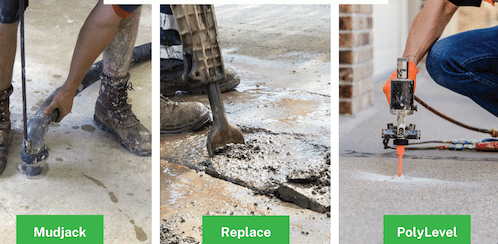
Here’s how it works: Mudjacking crews drill large-diameter holes into the surface, then inject a messy mixture of cement and soil below the concrete. Because the mud is hydraulically pumped under considerable pressure, it can lift the cement slab section back to its original position.
But the problem with traditional mudjacking is that the weight of the mixture that is pumped under the slab, combined with the weight of the concrete itself, can actually cause the slab to sink further if the soil beneath isn’t able to support the load.
What Causes Concrete to Sink?
It’s easy to blame the concrete slab itself when you see it sinking, but that heavy slab is rarely the real problem. The issue almost always lies in the ground underneath it. Concrete is incredibly heavy, and it needs a stable, solid base to rest on. When that base—the soil—becomes weak or shifts, the concrete has nowhere to go but down. Think of it like putting a heavy book on a soft pillow; it’s going to sink. Several things can cause the soil beneath your driveway, patio, or sidewalk to fail, turning a perfectly good slab into an uneven, hazardous surface. Understanding these root causes is the first step toward finding a permanent fix.
The Problem with the Soil Underneath
The ground beneath our feet seems solid, but it’s actually a dynamic environment. Water, organic materials, and how the soil was originally prepared all play a huge role in its stability. In Arkansas, we see a lot of expansive clay soil, which swells when it’s wet and shrinks dramatically when it dries. This constant movement can create voids or weak spots. Over time, the immense weight of the concrete slab presses down into these unstable areas, causing it to settle and crack. The problem isn’t your concrete; it’s the unstable soil that can no longer support it. Let’s look at the three main culprits behind failing soil.
Soil Erosion and Washout
Water is one of the most powerful forces of nature, and it can be a real troublemaker for the soil under your concrete. Heavy rainfall, poor drainage, or even a leaky sprinkler system can cause water to flow beneath the slab. As this water moves, it slowly washes away the soil, particle by particle. Over time, this erosion creates empty pockets and voids. The concrete slab is left without support in those areas, and gravity eventually forces it to crack and sink into the empty space. This is why managing water around your property is so critical for maintaining a stable foundation for your home and your concrete surfaces.
Poor Compaction
When your home was built, the soil was likely moved around to level the ground before any concrete was poured. This disturbed soil needs to be tightly packed down, or “compacted,” to create a dense, stable base. Unfortunately, this step is sometimes rushed or done improperly. If the soil is left loose with a lot of air pockets, it will inevitably settle over time under the weight of the concrete. It’s a slow process, but eventually, that gradual compression of the soil will cause the slab above it to sink and become uneven. It’s a hidden issue that often doesn’t show up for years after construction is complete.
Decaying Organic Material
It might sound strange, but what’s buried in the soil can also lead to sinking concrete. During construction, it’s common for organic materials like tree roots, stumps, or even discarded wood scraps to be buried in the fill dirt beneath a new slab. Over the years, this organic matter decomposes and rots away. As it breaks down, it leaves behind a void in the soil. Just like with soil erosion, this empty space leaves the concrete slab unsupported. The slab will eventually crack and settle into the void, creating a noticeable dip or uneven section in your driveway or patio.
Warning Signs of Sinking Concrete
Spotting sinking concrete early can save you a lot of headaches down the road. The signs often start small—a tiny crack or a slight slope you can barely feel under your feet. But these subtle clues are your property’s way of telling you that something is wrong with the soil underneath. Ignoring them allows the problem to get worse, leading to more significant damage and more extensive repairs. Being able to recognize these warning signs is key. You can walk your property and look for these telltale indicators to catch the issue before it becomes a major hazard.
Cracks and Uneven Surfaces
One of the most obvious signs of a sinking slab is the appearance of cracks. We’re not talking about tiny hairline fractures; we mean wider, more significant breaks in the concrete. You might also notice that one section of the slab is higher or lower than the one next to it, creating a dangerous trip hazard. This is especially common on sidewalks and pool decks. If you run your foot over the surface and feel a distinct bump or dip, that’s a clear indication that the slab has shifted. These cracks and uneven spots are direct evidence that the soil below can no longer provide even support.
Gaps Near Your Foundation
Take a look at where your concrete slabs meet your house or other structures. Do you see a gap opening up between your front steps and the sidewalk? Is your patio pulling away from your home’s foundation wall? These gaps are a serious red flag. They show that the entire concrete slab is sinking and moving away from the stationary structure. This not only creates a tripping hazard but can also expose your foundation to water intrusion, potentially leading to bigger foundation problems. A widening gap is a sign of active settlement that needs to be addressed.
Water Pooling After Rain
Your concrete driveway, walkway, and patio were all designed to be sloped just enough to allow water to drain away from your home. When a section of that concrete sinks, it disrupts this careful grading. The sunken area becomes a low spot, creating a shallow basin where rainwater collects. You might notice puddles that stick around for hours or even days after a storm. This standing water is more than just an annoyance; it can seep into the ground and worsen the soil erosion that caused the slab to sink in the first place, creating a vicious cycle of damage.
Sticking Doors and Windows
While sticking doors and windows are classic signs of a house foundation issue, they can also be related to sinking concrete, especially in certain situations. If your garage floor is sinking, it can twist the frame of the garage and affect the overhead door or the entry door into your home. For homes built on a slab foundation, a sinking section of the slab can absolutely cause enough structural shifting to make doors and windows misaligned and difficult to open or close. It’s a sign that the problem is more than just cosmetic and may require professional foundation repair.
Comparing Methods to Fix Sunken Concrete
Once you’ve identified that you have a sinking concrete problem, the next question is how to fix it. For years, the go-to method was messy and often ineffective. It involved pumping a heavy slurry of mud and cement under the slab, which could add too much weight and cause the already weak soil to sink even more. Thankfully, technology has come a long way, and modern methods offer a much more reliable and long-lasting solution. Instead of just treating the symptom, today’s best techniques address the underlying soil problem without adding extra weight to the area.
Polyurethane Foam Injection
The modern, preferred method for lifting and leveling concrete is polyurethane foam injection. This process is incredibly efficient and minimally invasive. A technician drills a few small, dime-sized holes into the sunken slab. Then, a two-part polymer foam is injected through the holes into the voids beneath the concrete. As the two liquids mix, they create a chemical reaction that causes the foam to rapidly expand. This expanding foam fills every gap, compacts the loose soil around it, and gently lifts the slab back to its original position. The foam is waterproof, so it won’t wash away, and it’s incredibly lightweight, so it won’t burden the soil. Best of all, it cures in about 30 minutes, so you can use your driveway or patio almost immediately.
What Are the Benefits?
Can be most inexpensive option
Can level concrete for a period of time
Minimal Disruption
If you’re picturing a huge construction zone in your yard, you can relax. Polyurethane foam injection is a surprisingly tidy process. Instead of tearing out and replacing entire concrete slabs—a major project that can take days and destroy your landscaping—this method works with what you already have. We drill a few small, dime-sized holes into the slab, which are barely noticeable. The repair is completed quickly, saving you the time and headache of a full-blown replacement. It’s all about restoring your concrete without turning your life upside down.
Lightweight Material
One of the main reasons concrete sinks is because the soil underneath can no longer support its weight. The last thing you want to do is add more weight to an already unstable situation. That’s the beauty of polyurethane foam. It’s incredibly strong but also extremely lightweight. The foam expands to fill voids and lift the slab, but it doesn’t add significant weight to the soil. This helps prevent future sinking by addressing the core foundation problems, rather than just putting a heavy patch on top of them. It’s a smart solution that works with the soil, not against it.
Quick Cure Time
We all have busy lives, and nobody wants to be blocked from using their driveway, patio, or walkway for days on end. With polyurethane foam, you don’t have to be. The foam expands and hardens in minutes, not days. In about 15 minutes, the material is fully cured and stable. For a driveway, you can typically drive on it within a half-hour of the repair being finished. This rapid cure time is a game-changer, especially for businesses that can’t afford long periods of downtime. It means you can get back to your normal routine almost immediately.
Long-Term Durability
When you invest in a repair for your home, you want it to last. Polyurethane foam is a permanent solution, not a temporary fix. Once cured, the foam is waterproof and inert, meaning it won’t wash away, erode, or break down over time. It maintains its shape and strength, continuing to support the concrete slab for years to come. This prevents new voids from forming and ensures your concrete stays level and stable. It’s the kind of reliable, long-term foundation repair that gives you true peace of mind, knowing the problem is solved for good.
What to Watch Out For
Not a permanent fix
Messy and disruptive
Large holes left in concrete by installers leave a polka-dotted look
Return to service in 1-4 days
The good news is there is a modern solution that requires minimal disruption to lift and stabilize concrete slabs.
Homeowners can achieve permanent concrete leveling with PolyLevel. PolyLevel is a two-part foam engineered to expand immediately upon injection beneath a settled slab. Injection holes are much smaller than those required for mudjacking.
In action, PolyLevel expands to many times its original volume, forcing the sunken concrete back to its original level. Within a matter of minutes, the expanded polymer hardens and reaches 90 percent or more of its final strength. This makes it possible for the restored surface to regain full functionality right away.
What we mean is, homeowners will be able to use their driveway in less than 20 minutes of concrete leveling with PolyLevel.
Traditional Slurry Leveling
While traditional slurry leveling might seem like a straightforward fix, it comes with some significant downsides that are important to understand. This older method involves pumping a heavy mixture under the concrete to lift it. Think of it as the original approach to leveling, but like many original methods, it has been improved upon over the years. Before you commit to this technique, it’s worth taking a closer look at the common issues homeowners face, from the materials used to the final appearance and long-term stability of the repair.
Heavy Material on Weak Soil
One of the biggest concerns with the traditional slurry method is the sheer weight of the material itself. The mixture, typically a combination of cement, soil, and water, is incredibly heavy. When this dense slurry is pumped beneath a concrete slab that is already sinking due to weak or unstable soil, it can actually make the problem worse. You’re essentially placing a massive weight onto ground that is already failing. This can cause the slab to sink even further over time, leading to more severe foundation problems and potentially requiring more extensive repairs down the road.
Large Injection Holes
To get that heavy slurry mixture underneath the concrete, crews have to drill large, noticeable holes into your slab. These holes, often several inches in diameter, are necessary to accommodate the volume and thickness of the material being pumped. Once the job is done, these holes are patched, but they rarely blend in seamlessly. The result is often a permanent, polka-dotted pattern across your driveway, patio, or sidewalk. This can be a real eyesore and significantly detract from your property’s curb appeal, leaving you with a constant visual reminder of the repair work.
Longer Cure Time
If you’re looking for a quick fix, traditional slurry leveling isn’t it. After the slurry is injected, it needs time to cure and harden. This process can take anywhere from one to four days, and sometimes even longer depending on the weather. During this time, you can’t walk or drive on the surface. This means your driveway could be out of commission for the better part of a week, or your patio might be off-limits for a planned weekend gathering. This long waiting period can be a major inconvenience and disruption to your daily routine.
Why It’s a Popular Alternative
Affordable, permanent solution
Non-invasive and less messy
Immediate return to service
Lightweight but strong
Environmentally friendly
Things to Keep in Mind
Can be more expensive than mudjacking
So when you’re frustrated from tripping on your uneven concrete one too many times and you’re ready to fix it, choose the option that makes the most sense for you and your family. And if you’re ready to lift and level your concrete with PolyLevel, call us for your free concrete repair estimate today!
Other Repair Options to Consider
While PolyLevel is a fantastic, modern solution for many situations, it’s helpful to know about other methods, too. Depending on how severe your concrete problem is, a different approach might be necessary. From a complete do-over to a more robust structural fix, understanding all the possibilities helps you make the most informed decision for your home and your budget. It’s all about matching the right repair to the specific issue at hand, ensuring you get a solution that truly lasts.
Full Concrete Replacement
Sometimes, the concrete slab itself is just too far gone. If your driveway or patio is a web of interconnected cracks or is crumbling and flaking apart, lifting it won’t fix the fact that the material is failing. In these cases, a full replacement is the only path forward. This is a major project that involves the loud, messy, and time-consuming process of tearing out all the old concrete, preparing the ground beneath, and pouring a brand-new slab. While it gives you a completely fresh surface, it’s also the most disruptive and often most expensive option, so it’s typically reserved as a last resort when the concrete is beyond saving.
Slab Piering for Severe Settling
When you’re dealing with very weak soil or a slab that has sunk significantly, you need a solution that addresses the problem at its source—deep in the ground. This is where slab piering comes in. This powerful technique involves driving heavy-duty steel piers through the unstable soil until they hit solid bedrock or stable, load-bearing soil. Brackets are then used to connect the piers to the slab, transferring its weight to this solid base. The slab can then be lifted back into place, permanently supported by the piers. This is the ultimate fix for serious settlement issues, as it bypasses the weak soil altogether.
Temporary DIY Fixes
It can be tempting to try a quick fix you saw online, like using a pry bar to lift a corner of a slab and stuffing some gravel or sand underneath. While we admire the can-do spirit, this method is really just a temporary patch. It might work for a single, wobbly garden paver for a short time, but it’s not a real solution for a driveway, pool deck, or patio. These DIY fixes don’t solve the underlying problem of unstable soil, and the material you pack underneath will almost certainly wash out or compress, leaving you right back where you started in a matter of months.
How to Prevent Sunken Concrete
As with most home maintenance, an ounce of prevention is worth a pound of cure. While you can’t change the soil your house was built on, you can take steps to protect it from the forces that cause concrete to sink in the first place. By managing water and ensuring any new concrete is poured correctly, you can dramatically reduce the risk of dealing with uneven, cracked slabs down the road. A little proactive care goes a long way in keeping your property safe and stable.
Manage Water and Drainage
The number one enemy of stable soil is uncontrolled water. When rain soaks the ground around and under your concrete slabs, it can slowly erode the soil, washing away the support your concrete needs. Over time, this leads to voids forming and your heavy slab sinking into them. The best defense is proper water management. Start by keeping your gutters clean so they don’t overflow. Then, make sure your downspouts direct water at least five feet away from your foundation and concrete slabs. Good drainage is one of the most effective ways to protect not just your concrete, but your entire home.
Ensure Proper Soil Compaction
If you’re planning to pour any new concrete, remember that the work done before the concrete truck arrives is critical for long-term success. Concrete is incredibly heavy, and it needs a solid, unmoving base to rest on. If it’s poured directly onto loose topsoil, that soil will inevitably compress and settle under the weight, causing your new slab to sink and crack. A professional installation should always start with preparing a solid base of well-compacted soil, often with an added layer of gravel to help distribute the load evenly. This creates a firm foundation that prevents sinking before it can ever start.
Maintaining Your Repaired Concrete
Once your concrete is level again, you’ll want to keep it that way. Protecting your investment in the repair is simple and doesn’t take much time, but it makes a huge difference in how long the fix will last. The key is to prevent the original problem—water intrusion—from happening again. A little bit of seasonal maintenance can help ensure your slab stays stable and secure for years to come, saving you from future headaches and expenses.
Seal Cracks and Joints
After your concrete has been lifted, the most important thing you can do is keep water from getting underneath it. Take a walk around your repaired driveway, patio, or sidewalk each spring and fall to inspect the surface and joints. If you spot any new cracks developing, no matter how small, it’s best to seal them right away with a high-quality, flexible concrete sealant. This simple step stops water from seeping beneath the slab, which in turn prevents soil erosion and protects the stability of your repair. It’s a small task that provides huge protection for your property.
Choosing the Right Solution for Your Home
Figuring out the best way to fix your sunken concrete can feel like a big decision, but it really just comes down to matching the solution to the problem. For most homeowners in Arkansas dealing with a sinking patio, uneven sidewalk, or dipping driveway, polyurethane foam injection is an excellent choice. It’s a clean, minimally invasive process that lifts and supports the slab by addressing the settled soil beneath it, all without adding significant weight. Best of all, it’s incredibly fast, allowing you to use your space again almost immediately.
However, if the settlement is severe or is tied to deeper foundation problems, a more robust approach may be needed. In these situations, slab piers can provide a permanent anchor, transferring the concrete’s weight to solid, stable ground far below the surface. While a full tear-out and replacement is always an option, it’s generally reserved for concrete that is too cracked and deteriorated to save. The best first step is to have a professional take a look. An expert can properly diagnose what’s happening beneath the surface and recommend a solution that will fix the problem for good.
Frequently Asked Questions
My concrete has only sunk a little bit. Is it okay to wait and see if it gets worse? It’s really tempting to take a “wait and see” approach, but I’d advise against it. Even a small dip or uneven spot is a clear sign that the soil underneath is no longer stable. That underlying problem, whether it’s from water erosion or poor compaction, doesn’t fix itself. Waiting usually just allows more time for the soil to wash away or settle further, which can lead to more significant sinking and cracking. Addressing it early is almost always simpler and helps prevent a small annoyance from turning into a major trip hazard.
How do I know if my concrete needs to be repaired or completely replaced? This is a great question, and it really comes down to the condition of the concrete slab itself. If your slab is mostly intact but has just sunk in a few areas, a repair like polyurethane foam injection is a fantastic option because it fixes the soil problem underneath. However, if the concrete is severely damaged, with a web of cracks, crumbling edges, or a flaking surface, lifting it won’t solve the issue of the failing material. In those cases, a full replacement is likely the better long-term solution.
Is the polyurethane foam really strong enough to hold up my heavy concrete slab? It absolutely is. It’s easy to think of foam as something soft, but this is a completely different material. It’s a high-density, structural-grade polymer that is specifically engineered for lifting heavy loads. Once injected, it expands and hardens into a solid, waterproof material that is incredibly strong and durable. It can easily support the weight of a concrete slab and even regular vehicle traffic on a driveway, all while being lightweight enough that it doesn’t add new stress to the soil below.
Will the repair process make a big mess of my yard and landscaping? Not at all, and that’s one of the best parts of using a modern repair method. The process is surprisingly tidy. Instead of bringing in heavy equipment that tears up your lawn, a technician works with small, specialized tools. They only need to drill a few dime-sized holes in the concrete to inject the foam. There’s no excavation and no piles of messy slurry, so your landscaping stays safe. The whole process is very clean and contained.
Once my concrete is lifted, is the problem solved for good? The polyurethane foam itself creates a permanent, waterproof support system under the slab that won’t wash away or break down. So yes, the repair is designed to be a long-term solution. To keep it that way, the best thing you can do is perform a little maintenance. Take a look at the joints and any cracks each year and seal them with a flexible concrete sealant. This simple step prevents water from getting under the slab in the future and creating new voids, ensuring your concrete stays stable for years to come.
Key Takeaways
- Focus on the Soil, Not Just the Slab: Sinking concrete is a symptom of unstable ground; the real problem is often water eroding the soil underneath, creating voids that can no longer support the heavy slab above.
- Opt for a Modern, Lightweight Repair: Polyurethane foam injection is a superior fix because it lifts the concrete and stabilizes the soil without adding more weight. This method is fast, minimally disruptive, and lets you use your driveway or patio almost immediately.
- Prioritize Proper Water Drainage: The most effective way to prevent future sinking is to manage water around your home. Keeping gutters clean and extending downspouts away from concrete areas helps maintain stable soil and protects your property.