
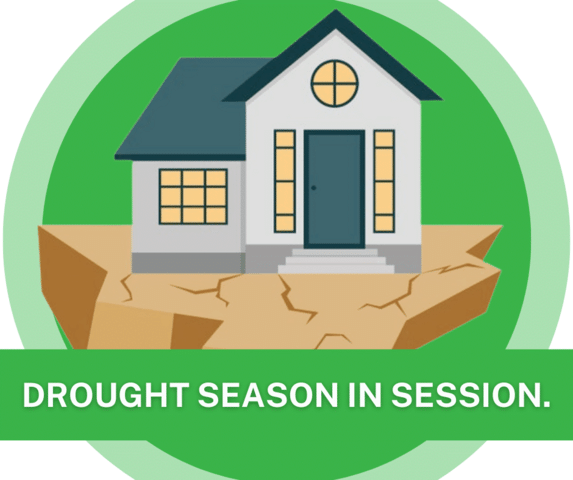
You know that one door that starts sticking every July? Or the new, hairline crack that suddenly appears over the window frame? It’s easy to blame the summer heat, but the real problem might be deeper. When the soil dries out and shrinks, it can cause parts of your house to shift and settle. This puts incredible stress on your home’s foundation. These aren’t just quirks of an older house; they’re warning signs. Knowing what to look for is the key to protecting your biggest investment.
But it’s not just the soil beneath our lawns that’s shrinking. The soil beneath our homes is, too particularly when dry periods extend for months (or even years, in extreme cases). And when soil shrinks, it creates voids empty spaces into which a foundation can settle.
What is a Home’s Foundation?
Think of your home’s foundation as its bedrock. It’s the structural base that supports the entire weight of your house, from the walls and roof right down to the furniture and your family inside. Its main job is to transfer that heavy load to the ground in a safe and stable way. A well-built foundation keeps your home level, prevents it from sinking or shifting, and provides a crucial barrier against ground moisture. When everything is working as it should, you probably don’t give it a second thought. But because it’s so essential, even small issues can lead to bigger problems down the road, which is why understanding its basic parts is so helpful for any homeowner.
Key Components of a Foundation
A foundation isn’t just one single piece; it’s a system of components working together to keep your home secure. Each part has a specific role, from spreading the weight of the house to managing water. Understanding these key players can help you spot potential issues early on. The main parts you’ll find in most foundations are the footing, the stem wall, the slab, and the drainage system. Together, they form the strong base that your home relies on every single day.
The Footing
The footing is the very bottom part of the foundation, kind of like the feet of your house. It’s a wide, concrete base that sits below the frost line, and its purpose is to spread the entire weight of your home over a large area of soil. This distribution is key to preventing the house from sinking or settling unevenly. By creating a stable platform, the footing ensures that the load is managed properly, providing the solid start your home’s structure needs to stand strong for years to come.
The Stem Wall
Sitting right on top of the footing is the stem wall. This is the vertical wall, usually made of poured concrete or concrete blocks, that connects the footing to the main structure of your house. It raises the house off the ground, which is especially important for homes with crawl spaces or basements. Often reinforced with steel, the stem wall provides stability, resists lateral pressure from the surrounding soil, and helps carry the weight from the walls above down to the footing below.
The Slab
The slab is the flat, horizontal concrete surface that forms the floor of your home. In a slab-on-grade foundation, this is the main floor you walk on. In a house with a basement, the slab is the basement floor. A properly poured slab is crucial for distributing the home’s weight evenly and providing a level surface for the interior construction. It needs to be strong and flat to ensure the structural integrity of everything built on top of it, from the interior walls to your kitchen cabinets.
Drainage Systems
An effective drainage system is one of the most important, yet often overlooked, components of a healthy foundation. This system is designed to collect groundwater and surface water around your foundation and channel it safely away from your home. Without proper drainage, water can build up in the soil, creating immense pressure against your foundation walls and leading to cracks, leaks, and shifting. A good drainage system is your first line of defense in any basement waterproofing strategy, protecting your home from costly water damage.
Common Types of House Foundations
Not all homes are built on the same type of foundation. The right choice depends on factors like the local climate, soil conditions, and the design of the house itself. In Arkansas, you’ll see a few common types, each with its own set of benefits and potential challenges. The three you’re most likely to encounter are basement foundations, crawl space foundations, and concrete slab foundations. Understanding which type you have is the first step in knowing how to care for it and what signs of trouble to look for. Each style interacts with our local clay soil and weather patterns a little differently.
Basement Foundations
A full basement foundation is built with concrete walls that extend deep into the ground, typically eight feet or more, creating an entire floor of the house below ground level. This provides a lot of extra square footage for storage or living space. However, because they are completely surrounded by soil, basements are particularly vulnerable to water intrusion from hydrostatic pressure. Proper drainage and solutions for basement flooding are absolutely essential to keep a basement dry and healthy, preventing issues like leaks, mold, and musty odors from taking hold.
Crawl Space Foundations
Very common in our region, a crawl space foundation lifts the house about one to three feet off the ground. This creates a short, accessible space beneath the home that’s perfect for running plumbing, electrical wiring, and HVAC ductwork. While this access is convenient, crawl spaces are notorious for collecting moisture, which can lead to wood rot, pest infestations, and poor indoor air quality. A vapor barrier is a key part of any crawl space solution, helping to block ground moisture and protect the structure of your home.
Concrete Slab Foundations
A concrete slab foundation is essentially a single, thick pad of concrete that is poured directly onto the ground. It’s a simpler and often more cost-effective option, especially popular in areas without freezing ground. With a slab foundation, there is no space underneath the house. One of the main challenges with this type is that plumbing and electrical lines are often embedded within the concrete, which can make repairs more complex and expensive if a problem arises down the line.
Monolithic Slab
A monolithic slab is a specific type of slab foundation where the footing and the floor slab are poured all at once, creating a single, solid piece of concrete. This method is efficient and creates a strong, seamless foundation. The edges of the slab are thickened to act as the footing, providing the necessary support around the perimeter of the house. This “all-in-one” approach is popular in modern construction for its speed and simplicity, forming a sturdy base for the home built upon it.
Pier and Beam Foundations
A pier and beam foundation is similar to a crawl space in that it elevates the house off the ground. However, instead of continuous concrete walls, it uses a series of concrete piers or posts that are driven into the ground. These piers support large wooden beams, which in turn support the floor joists of the house. This type of foundation can be a good choice for sloped lots or areas with unstable soil, as the piers can be extended to reach more stable ground deep below the surface.
Specialized Foundation Types
While most homes use one of the common foundation types, some properties require a more specialized approach. This is often the case for commercial buildings or homes built on particularly challenging terrain, like very soft soil or steep hillsides. These specialized foundations are engineered to handle specific environmental stressors and provide the necessary stability where a standard foundation might fail. Though you might not see them every day, they are crucial for safe construction in difficult conditions.
Piling Foundations
When the soil near the surface is too weak or unstable to support a building, a piling foundation is used. This involves driving long, slender columns—called piles—made of steel, concrete, or wood deep into the ground. These piles bypass the weak upper soil layers and transfer the building’s weight to the strong, stable soil or rock far below. This is a highly effective method for ensuring stability in poor soil conditions, using a principle similar to the helical piers used in foundation repair.
Raft or Mat Foundations
Imagine a building floating on a concrete “raft.” That’s the basic idea behind a raft or mat foundation. It consists of a large, thick, reinforced concrete slab that covers the entire footprint of the building. This design spreads the structure’s weight over a very wide area, which is ideal for sites with weak or compressible soil. By distributing the load so broadly, it reduces the pressure on the ground and prevents the building from sinking or settling unevenly.
Frost-Protected and Insulated Foundations
More common in colder climates, a frost-protected foundation uses rigid insulation around its exterior to prevent the ground underneath from freezing and heaving. Frost heave can exert incredible force on a foundation, causing it to crack and shift. By keeping the ground temperature above freezing, the insulation maintains stable soil conditions year-round. While extreme frost heave isn’t a primary concern in Arkansas, the principle of insulation is still valuable for moisture control and energy efficiency in basements and crawl spaces.
How Long Should a Foundation Last?
With proper construction and decent conditions, a modern home’s foundation should last for the life of the house, typically around 80 to 100 years. However, that lifespan isn’t guaranteed. A foundation is in a constant battle with forces of nature, including shifting soil, water pressure, and even tree roots. Its longevity really depends on the quality of its initial construction, the stability of the soil it was built on, and how well it’s been maintained and protected from water over the years. Even the best-built foundation can run into trouble if the conditions around it change dramatically.
Common Causes of Foundation Damage
Foundation problems rarely happen overnight. They usually develop slowly, caused by persistent environmental pressures. The most common culprits are related to soil and water, which work together to put stress on your home’s base. Things like poor drainage, invasive tree roots, and even the quality of the original construction can all contribute to the development of foundation problems. Being aware of these common causes can help you protect your home and address issues before they become severe.
Shifting and Shrinking Soil
The expansive clay soil found throughout Arkansas is a major cause of foundation issues. This type of soil swells significantly when it’s wet and shrinks dramatically when it dries out. During a dry summer, the soil can pull away from your foundation, creating empty spaces or voids. The foundation can then settle or sink into these gaps, causing cracks and uneven floors. This constant cycle of expansion and contraction puts immense stress on a foundation over time.
Water and Drainage Issues
Water is the number one enemy of a foundation. Poor drainage, clogged gutters, or improper grading can allow water to pool around your home. This saturated soil exerts hydrostatic pressure, pushing against your foundation walls and potentially causing them to bow or crack. Over time, this water can also erode the soil that supports the foundation, leading to settlement. Effective crawl space waterproofing and basement drainage are critical for channeling this water away and relieving that pressure.
Tree Root Intrusion
Large trees planted too close to a house can pose a significant threat to the foundation. As tree roots grow, they can exert enough force to push against and crack foundation walls and slabs. Additionally, large root systems draw a tremendous amount of moisture out of the soil, especially during dry periods. This can cause the soil to shrink unevenly beneath your home, leading to settlement and structural stress in the same way a drought would.
Poor Initial Construction
Sometimes, foundation problems are built in from the very beginning. If the soil wasn’t properly compacted before the foundation was poured, it can settle unevenly later on. Other construction issues, like an improperly mixed concrete formula or inadequate steel reinforcement, can create weak spots that are more susceptible to cracking and failure under pressure. These hidden flaws may not become apparent for years, but they can eventually lead to significant structural issues.
Signs of Foundation Settlement
You might expect a sinking foundation to be obvious to the eye, but this isn’t always the case. Because a foundation tends to settle slowly, you may not notice it just by looking at your home from across the street.
However, when a foundation does settle, it typically doesn’t do so uniformly. For instance, one corner of your home may sink deeper and faster than another. This uneven settlement can often throw off a house’s geometry, so its once true and parallel frame becomes skewed. And when that happens, symptoms may appear all over the structure, including:
- Sticking windows and doors
- Sagging floors
- Floor or ceiling gaps
- Drywall cracks
- Interior cracks near window or door frames
- Separating chimneys
- Stair-step cracks in brick or block walls
So, the next time you struggle to open a window, it may not be the window that’s the problem. It could be something happening many feet below it.
The thing is, though, foundation problems don’t get better over time. And they don’t get less expensive to repair, either. But they can typically be fixed permanently. And, in many cases, the settling foundation can be raised back to its original position.
Solutions for Foundation Settlement
The best way to prevent a home’s foundation from sinking further is to physically connect it to bedrock or stable soil. And the best way to do that is to drive steel piers deep into the ground until they reach bedrock or competent soil and connect them to the home with heavy-duty steel brackets. Once this is done, the foundation can be raised to its original level.
Piers are essentially sections of steel tubing that are mechanically pushed into the soil until they reach bedrock or stable soil. In certain situations, specialty piers with fins, known as helical piers, are driven (literally screwed) into the soil to achieve the same stability.
Foundation Piering Systems
Think of a piering system as a way to give your house its own set of stilts that reach deep down to solid ground. These systems work by transferring the massive weight of your home off the unstable, shifting soil near the surface and onto strong, stable soil or bedrock far below. We use different types of steel foundation repair products, like push piers or helical piers, depending on your home’s specific needs and the soil conditions on your property. The piers are installed deep into the earth and then secured to your foundation with heavy-duty brackets. This process not only stops the sinking but often allows us to gently lift the settled parts of your foundation back toward their original level, giving you a stable, secure home for the long haul.
(It goes without saying that piering is a major procedure and needs to be done by a company with a lot of experience.)
What if I Don’t Fix It?
Since foundations settle slowly, it can be tempting to ignore them. After all, sticking doors and sagging floors can often be chalked up to a home’s character, especially if it’s over 50 years old. But as mentioned earlier, foundation problems only grow worse with time. And if left unaddressed, they can eventually lead to catastrophic foundation failure which, believe us, is something you don’t even want to contemplate.
So, why fix it?
Well, because it’s your home, for one thing. It’s where you and your family live. It’s where your memories are made. But it’s also likely your single largest financial investment, so it just makes sense to protect it. Plus, if you ever sell your home, you must disclose any foundation problems it has. And the cost of stabilizing your foundation is often much less than the financial loss you’ll take if you sell it as-is.
There’s also the matter of cost. After all, because foundation problems only grow worse with time, they’ll never be less expensive to fix than they are today.
The good news is, with modern piering technology, settling foundations can almost always be fixed permanently. But you need to have your home inspected by a reputable company with specific expertise and deep experience in this area no general contractors, please!
And once your home’s foundation is stabilized and returned to its original level? Well, you’ll be sleeping soundly no matter how hot and dry it is outside
Choosing the Right Contractor and Maintaining Your Foundation
Once you’ve identified a potential issue with your foundation, the next steps are all about finding the right help and taking proactive measures to protect your home for the long haul. Addressing foundation settlement isn’t a DIY project; it requires specialized knowledge and equipment. But beyond the initial fix, there are simple, routine things you can do as a homeowner to prevent future problems from cropping up. It’s a two-part approach: pairing professional expertise with smart home maintenance to ensure your foundation remains stable and secure for years to come.
How to Hire a Reputable Foundation Repair Company
When it comes to the structural integrity of your home, you want a specialist, not a jack-of-all-trades. While a general contractor is great for many home projects, foundation repair is a unique field that demands deep experience and specific training. A reputable company will have a team of experts who do this kind of work day in and day out. They will conduct a thorough inspection of your property, explain the underlying cause of the problem, and walk you through the proposed solution using proven products and techniques. Look for a company that is transparent, knowledgeable, and can provide a permanent solution, giving you confidence that the job will be done right the first time.
Preventive Foundation Maintenance for Homeowners
After your foundation is secured, or even if you’re just looking to be proactive, a little maintenance can go a long way. Think of it as simple upkeep that protects your home’s biggest asset. Most foundation problems are tied to one thing: water. Too much or too little water in the soil around your home can lead to shifting, settling, and cracking. By managing water and soil conditions and keeping an eye out for changes, you can significantly reduce the risk of damage. The following steps are straightforward habits that can save you a lot of stress and expense down the road.
Manage Water and Drainage
Controlling the water around your home is the single most important thing you can do for your foundation. Start by making sure your gutters are clean and free of debris so they can function properly. Attach downspout extenders to carry rainwater at least five to ten feet away from your foundation. You should also check the grading, or slope, of the soil around your house. It should gently slope away from the walls to ensure that water flows away from your home, not toward it. Proper drainage prevents soil from becoming oversaturated, which can exert immense pressure on your foundation and lead to serious issues like water intrusion and wall failure.
Maintain Consistent Soil Moisture
The clay soil common in our area acts like a sponge—it swells when it’s wet and shrinks dramatically when it’s dry. This constant cycle of expansion and contraction puts a tremendous amount of stress on your foundation. During long, hot droughts, the soil can shrink so much that it pulls away from the foundation, creating gaps that leave it unsupported. To counteract this, you can lightly water the soil around your foundation during extended dry periods. The goal isn’t to soak the ground but to maintain a consistent, minimal level of moisture that prevents the soil from cracking and shrinking away from your home.
Schedule Regular Professional Inspections
Just like you visit the doctor for an annual check-up, your foundation benefits from a regular professional inspection. An expert can spot the subtle, early signs of trouble that are easy for a homeowner to miss. Catching an issue when it’s small can prevent it from turning into a massive, complex repair. A yearly inspection gives you a clear picture of your foundation’s health and, most importantly, provides peace of mind. If you have any concerns or just want a baseline assessment, don’t hesitate to contact a professional for a comprehensive evaluation.
Frequently Asked Questions
Are a few small cracks or a sticky door really a sign of a major foundation problem? While not every crack is a catastrophe, these signs are often the earliest clues that your foundation is shifting. Think of it this way: your house is built as a level, square structure. When one part of the foundation settles unevenly, it puts stress on the entire frame, which can cause doors to stick, windows to jam, and cracks to appear in your drywall. It’s always smarter to investigate these small symptoms before they have a chance to become bigger issues.
Why does my foundation seem to have more problems during dry summers? That’s a great question, and it has everything to do with the clay soil we have here in Arkansas. This type of soil expands a lot when it’s wet and shrinks just as much when it dries out. During a long, hot summer, the soil can pull away from your foundation, creating empty spaces. Your house can then settle into these gaps, causing the problems you’re noticing. This constant cycle of shrinking and swelling puts a huge amount of strain on your home’s structure over the years.
What exactly is a piering system and how does it fix a sinking foundation? A piering system is a permanent way to stabilize your home. Essentially, strong steel piers are driven deep into the ground, past all the unstable surface soil, until they reach solid bedrock or a layer of competent earth. Then, heavy-duty steel brackets are used to connect these piers directly to your home’s foundation. This process transfers the entire weight of your house onto that solid, unmoving base, stopping the settlement for good and often allowing us to lift the home back toward its original position.
What’s the most important thing I can do to protect my foundation? Hands down, the most critical thing you can do is manage the water around your home. Most foundation problems start with either too much or too little water in the soil. You can make a huge difference by simply keeping your gutters clean and making sure your downspouts direct water at least five feet away from the house. Also, check that the ground around your foundation slopes gently away from it, so water doesn’t pool against the walls.
Can’t my regular handyman or a general contractor handle foundation repairs? Foundation repair is a highly specialized field that requires specific engineering knowledge and equipment. While a general contractor is perfect for many home projects, they typically don’t have the focused experience needed to diagnose and permanently solve complex soil and structural issues. For the safety and long-term stability of your home, you really want to work with a company that specializes in foundation solutions every single day.
Key Takeaways
- Master the water around your home: Most foundation problems are caused by too much or too little moisture in the soil. You can prevent issues by keeping your gutters clean, extending downspouts away from the house, and ensuring the ground slopes away from your foundation walls.
- Listen to what your house is telling you: Seemingly small issues like sticking doors, cracks in the drywall, or gaps between the floor and wall are often the first signs of foundation settlement. Addressing these symptoms early can prevent them from becoming much larger problems.
- Hire a specialist for a permanent fix: Foundation repair is not a job for a general contractor; it requires specific expertise. A professional can install a permanent solution, like a steel piering system, that transfers your home’s weight to stable soil deep underground.
Related Articles
- How Winter Weather Affects Your Foundation
- Concrete Repair Options – Foundation Repair & Basement Waterproofing
- Foundation Wall Failure: A Better Fix Than Replacement
- Retaining Wall Repair Methods – Foundation Repair & Basement Waterproofing
- Foundation Crack Repair – Foundation Repair & Basement Waterproofing