
Crawl Space Encapsulation and Diagnosing Energy Efficiency During Cold Weather in Northwest Arkansas
That constant chill you feel in your toes might be more than just a minor annoyance. It could be a sign that your home is fighting a losing battle against the cold air infiltrating from below. This phenomenon, known as the stack effect, pulls cold air up from your crawl space and distributes it throughout your living areas, making your floors frigid. This not only affects your comfort but also your energy bills. We’ll explain how sealing your crawl space and crawl space encapsulation can create a warmer home and explore the other reasons you might be experiencing cold feet, so you can find a lasting solution.
In extreme weather conditions, cold, uncomfortable floors are the last thing you need!
Basement foundations replicate the temperature of the area below the floors above them. Despite wearing socks and putting down rugs, the cold still lingers. Many homeowners have been advised to insulate their floor joists (the crawl space ceiling) in order to protect their floors from the piercing cold beneath them. It is not a long-term solution to just insulate floor joists alone.
Keeping your crawlspace well-maintained is one of our main goals here at Vesta. Keep your home and feet warm by taking care of any issues in the crawlspace right away!
Is It Your Health or Your Home? Uncovering the Cause of Cold Feet
Figuring out why your feet are always cold can feel like a bit of a mystery. The answer often lies in one of two places: your environment or your own body. Environmental factors are usually the easiest to spot. If your feet are warm everywhere except at home, it’s a strong sign that your house is the culprit. Cold air seeping up from a damp, unsealed crawl space can make your floors frigid, which in turn chills your feet. Addressing these issues through professional crawl space repair and crawl space encapsulation can make a world of difference in your home’s comfort and energy efficiency.
Stack effect occurs when cold air rises from the crawl space and distributes itself throughout the house.
As a result of the stack effect, your home can become less comfortable to live in. You may have to work twice as hard to heat your home if a crawl space is present. It’s an expensive and burdensome cycle!
Your utility bills will rise if you use your heating system to compensate for the coldness of your floor. Once summer arrives, your family’s cooling system will have to work harder to keep your home cool due to the humidity in the air.
Keeping a home warm in the winter and cool in the summer can be made easier when you insulate your basement or crawlspace.
If your crawl space has cold floors, here are three tips to help you solve the issue:
It can be both a major problem and a minor inconvenience to have cold floors in crawl spaces. Instead of ignoring these issues, we want to assist in resolving them.
Contact our crawl space repair professionals today to schedule a free, no-obligation estimate! Proudly serving the Greater OKC, Tulsa and surrounding areas and Northwest Arkansas.
Why a Damp or Vented Crawl Space is a Problem
That chilly feeling under your feet is often a direct result of what’s happening in your crawl space. Many homes have vented crawl spaces, which were once thought to be a good way to air out the area. Unfortunately, these vents do more harm than good. In the winter, they let frigid air flow directly under your floors, turning them into giant ice packs. In the summer, they invite in warm, humid air, which can lead to condensation, mold growth, and wood rot. This moisture makes the air feel colder and can compromise your home’s structural integrity. A damp, vented crawl space is an open invitation for cold floors, high energy bills, and a host of other crawl space issues.
Creating a Warmer Home from the Ground Up
The most effective way to get rid of cold floors for good is to address the root of the problem: the crawl space. Simply stuffing insulation between the floor joists is like putting a bandage on a larger wound—it doesn’t solve the underlying issue of cold air and moisture infiltration. Creating a truly comfortable and energy-efficient home starts from the ground up. By properly sealing and conditioning your crawl space, you stop the stack effect in its tracks. This means cold air no longer gets pulled up into your living areas, allowing your heating system to work more efficiently and saving you money on utility bills.
A well-maintained crawl space not only leads to warmer floors but also improves your home’s overall air quality and protects it from long-term damage. When moisture and humidity are left unchecked, they can weaken wooden support beams and joists, leading to sagging floors and serious foundation problems. By creating a dry, sealed environment, you are investing in the structural health of your entire home. It’s a permanent solution that provides benefits far beyond just comfort, ensuring your home is safe, stable, and healthy for years to come. Taking control of the space beneath your home is the key to a warmer, more resilient house.
Professional Solutions for Your Crawl Space
While the concept of sealing your crawl space sounds straightforward, achieving a permanent solution requires professional expertise from Vesta Foundation Solutions. The goal is to completely isolate your home from the earth and outside air, creating a clean, dry, and conditioned environment. This isn’t just about blocking a few vents; it involves a comprehensive system designed to manage both air and moisture. At Vesta, our team evaluates the specific conditions of your home to recommend the right combination of solutions. Providing a professional approach ensures that every entry point for cold air and moisture is addressed, giving you lasting comfort and peace of mind. It all starts with a thorough inspection to identify exactly what your home needs to stay warm and dry.
Crawl Space Encapsulation with a Vapor Barrier
The cornerstone of a dry and healthy crawl space is encapsulation. This process involves completely sealing the area with a durable, tear-resistant liner. We use a heavy-duty vapor barrier to cover the dirt floor and extend up the foundation walls, effectively stopping ground moisture from seeping into the space. As part of the encapsulation, we also seal off any vents and air leaks to prevent outside air from entering. This creates a controlled environment under your home, eliminating the drafts that make your floors cold. By isolating your home from the damp earth, encapsulation is the first critical step toward achieving warmer floors and a more comfortable living space year-round.
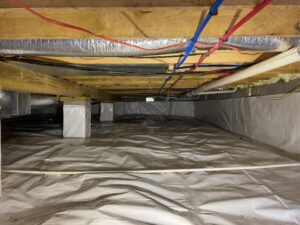
Farmington Crawl Space After Encapsulation
Waterproofing and Dehumidifier Installation
For crawl spaces with significant water intrusion or high humidity, encapsulation alone may not be enough. If your crawl space experiences leaks or flooding, a full crawl space waterproofing system, including an interior drain and a sump pump, may be necessary to actively remove water. Once the space is sealed and bulk water is controlled, the final step is to manage the air’s moisture content. Installing a powerful, energy-efficient crawl space dehumidifier will keep the relative humidity at an optimal level. This prevents mold growth, eliminates musty odors, and ensures the air under your home is dry and conditioned, contributing to warmer floors and healthier air throughout your house.
At-Home Tips for Warmer Feet
While fixing your crawl space is the ultimate solution for cold floors, you might be looking for some immediate relief. It’s important to note that persistently cold feet can sometimes be a sign of a medical condition, so it’s always wise to consult a doctor if you have concerns. However, for many of us, cold feet are simply a reaction to a chilly environment. As you take steps to warm up your home from the ground up, there are a few simple things you can do to keep your feet more comfortable in the meantime. These at-home remedies can help improve circulation and provide that cozy feeling you’re looking for on a cold day.
Lifestyle Adjustments and Remedies
A few simple lifestyle changes can make a big difference in how warm your feet feel. According Harvard Health, regular exercise is a great way to get your blood flowing and warm your body from the inside out. Even a brisk walk can help. Of course, wearing warm socks made from wool or other insulating materials is a classic for a reason. You can also try gently massaging your feet to encourage blood flow to the area. At the end of the day, propping your legs up with a pillow when you lie down can also aid circulation, helping you feel warmer and more comfortable.
Frequently Asked Questions
I put rugs down and wear thick socks, but my floors are still freezing. Is my crawl space really the problem? It very likely is. That deep, persistent chill you feel is often caused by cold air being pulled up from an unsealed crawl space into your home, a process known as the stack effect. Rugs and socks can only do so much because the floor itself is being constantly cooled from below. Sealing and conditioning the crawl space stops this cycle at the source, which is the only way to achieve a lasting, comfortable temperature for your floors.
My dad told me to just stuff insulation between the floor joists. Why isn’t that enough? While it seems like a logical fix, simply adding fiberglass insulation under your floor is often a temporary and incomplete solution. If your crawl space is damp or vented, that insulation will absorb moisture, which makes it less effective and can lead to mold and rot. The real solution is to stop the cold, damp air from getting into the crawl space in the first place through encapsulation. This creates a dry, conditioned space that treats the cause, not just the symptom.
How can I tell if my cold feet are a sign of a health issue or just a cold house? A good rule of thumb is to consider where and when your feet feel cold. If they are mainly cold when you’re at home but warm up when you’re elsewhere, your house is the likely culprit. However, if your feet are persistently cold no matter where you are, or if you notice other symptoms like changes in skin color, numbness, or tingling, it’s a good idea to chat with your doctor to rule out any underlying health conditions.
What exactly is crawl space encapsulation? Is it just laying down some plastic? Crawl space encapsulation is much more than just putting plastic on the ground. It’s a comprehensive process of completely sealing the crawl space from the earth and outside air. This involves lining the floor and walls with a thick, durable vapor barrier, sealing all vents and air leaks, and often installing a dehumidifier to control the moisture levels. The goal is to create a clean, dry, and healthy environment under your home that is part of your conditioned living space.
Besides warmer floors, are there other benefits to fixing my crawl space? Absolutely. Creating a sealed and dry crawl space offers several important advantages for your entire home. It can significantly improve your indoor air quality by preventing musty, moldy air from rising into your living areas. It also helps lower your energy bills because your heating and cooling systems won’t have to work so hard to fight the outside elements. Finally, it protects the wooden structures of your home, like support beams and joists, from moisture damage and rot, preserving your home’s structural integrity.
Key Takeaways
- Your home could be the culprit: Before worrying about your health, consider your environment. Cold air rising from a damp, vented crawl space is a common cause of frigid floors and feet, but it’s a problem with a clear, professional solution.
- A permanent fix starts below your floors: The most effective way to warm up your home is to address the source. Sealing the crawl space with a vapor barrier and managing moisture with a dehumidifier stops cold air infiltration for good, leading to greater comfort and lower energy bills.
- Listen to your body’s warning signs: If your feet are persistently cold even in warm settings or you notice symptoms like skin discoloration, numbness, or tingling, it is best to consult a doctor to rule out any underlying medical conditions.