
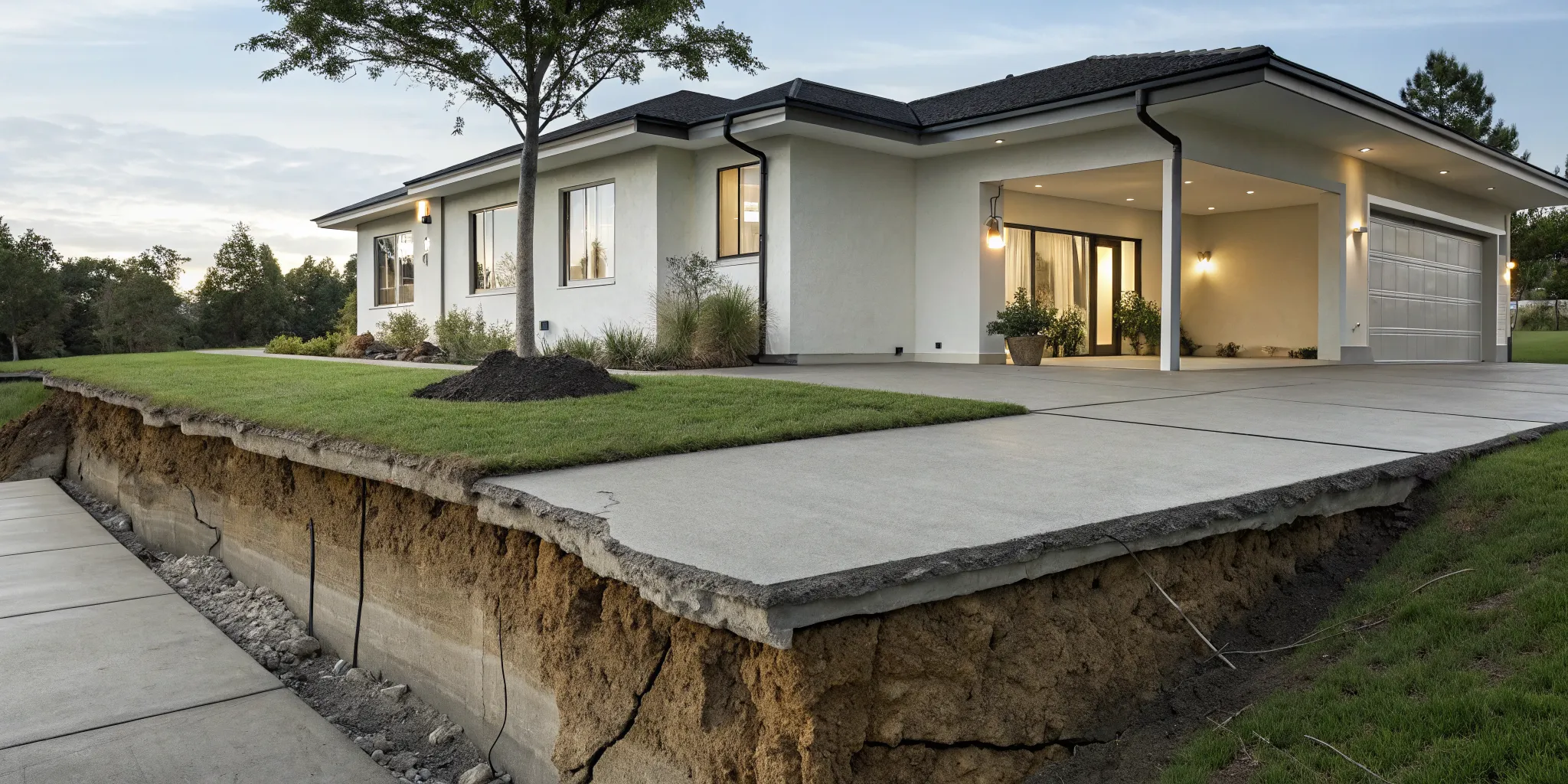
That thin crack spidering up the drywall wasn’t there last month. Now, the bedroom door is starting to stick, and you have a nagging feeling these small annoyances are symptoms of a much bigger problem. If your home rests on a concrete slab, these are often the first clues that something is shifting underneath. This is where understanding slab foundation repair becomes so important. It’s not just about patching a crack; it’s about finding the root cause to secure your home’s entire structure. I’ll walk you through everything, from identifying the key warning signs to understanding the different repair methods.
Key Takeaways
- Learn to spot the early warning signs: Your home will tell you when something is wrong, so pay attention to new cracks in walls, sticking doors and windows, or uneven floors, as these are often the first clues to foundation issues.
- Realize that the right fix depends on the cause: Foundation repair is not a one-size-fits-all solution; the best method, whether it’s foam injection or underpinning with piers, is determined by an accurate diagnosis of the underlying problem.
- Choose a trusted professional and maintain the work: Your home’s long-term stability relies on hiring a qualified, insured contractor who offers a strong warranty and on your commitment to preventative maintenance, especially managing water drainage.
What Is a Slab Foundation?
Let’s start with the basics. A slab foundation is exactly what it sounds like: a single, solid slab of concrete that’s poured directly onto prepared ground. Think of it as a one-piece floor for your entire home, typically about four to six inches thick. Unlike homes with basements or crawl spaces, there’s no empty space underneath your floor. This straightforward design is popular here in Arkansas because it’s generally quicker and more cost-effective to build. However, that simplicity also means that any issues with the ground beneath can directly impact your home’s structure, leading to common foundation problems that you can’t ignore. It’s a solid, reliable base for a home, but it’s not immune to the forces of nature working just beneath the surface.
Because the slab is a single structural element, its integrity is crucial for the stability of the entire house built on top of it. Everything from your walls to your roof relies on that concrete pad remaining solid and level. When the soil underneath shifts, settles, or expands, the slab is put under an incredible amount of stress. This is why you might notice those hairline cracks in your drywall or a door that suddenly refuses to latch properly. These aren’t just quirks of an aging house; they are often direct communications from your foundation telling you that something is amiss. Understanding this direct connection between the ground and your home is the first step in knowing how to protect your investment for the long haul.
Characteristics of a Concrete Slab
The most defining feature of a concrete slab is its direct contact with the earth. While this design is efficient, it creates a few unique challenges for homeowners. For example, if a plumbing line breaks beneath the floor, accessing it often means cutting through the concrete—a disruptive and involved process. More importantly, because the slab rests directly on the soil, it’s vulnerable to any shifts or changes in the ground. Expansive clay soils, common in our area, can swell with moisture and shrink when dry, putting immense pressure on the slab. This constant movement can lead to cracks, settling, and uneven floors, requiring professional foundation repair to restore your home’s stability.
What Is Slab Foundation Repair?
When you hear “foundation repair,” it might sound like a massive, complicated project, but let’s break it down. Slab foundation repair is simply the process of fixing issues with the single concrete slab your home sits on. Unlike homes with basements or crawl spaces, a slab foundation is a solid piece of concrete poured directly onto the ground. Over time, things like shifting soil, poor drainage, or even tree roots can cause this slab to crack, sink, or become uneven. The goal of repair isn’t just to patch up cracks you can see; it’s to address the underlying cause and make your home stable and secure for the long haul.
Professionals use several specialized techniques to correct these problems. You might hear terms like slabjacking, which involves lifting the slab with a grout-like mixture, or using polyurethane foam to achieve the same result with a lighter, more durable material. For more serious settlement issues, contractors might install steel piers deep into the ground to support and lift the foundation. Each method is designed to fix a cracked or settling slab and prevent future movement, ensuring your home rests on solid ground. Think of it less like a patch and more like a permanent solution that restores your home’s structural integrity. The right approach depends entirely on what’s causing the problem in the first place, which is why a professional assessment is so important.
Signs of Slab Foundation Problems
Your home has a way of talking to you, and it’s smart to listen when it does. Those little quirks you’ve been noticing—a door that suddenly sticks or a tiny crack in the drywall—are often your house’s way of telling you something is shifting beneath your feet. Spotting these signs early can make a world of difference, turning a potentially huge headache into a manageable fix. Foundation problems rarely get better on their own; they tend to slowly worsen over time. By learning to recognize the common warning signs, you can take action before minor issues escalate. Let’s walk through some of the most frequent clues that your slab foundation might need some attention.
Cracks in Your Walls or Floors
Cracks are probably the most well-known sign of foundation trouble, but it’s important to know which ones to worry about. A hairline crack above a doorway might just be from the house settling naturally over time. However, certain types of cracks are clear indicators that the foundation is moving in a way it shouldn’t be. You might see them on interior drywall, exterior brick, or even on the concrete slab itself if you have exposed flooring. These fractures are often the first visual evidence of underlying foundation problems and can tell a story about how your home is shifting. Paying attention to the location, direction, and size of these cracks is the first step in diagnosing the issue.
Diagonal Cracks Near Doors and Windows
Have you noticed cracks that seem to shoot out from the corners of your windows or doors, running diagonally up the wall? This is a classic sign of foundation settlement. The areas around doors and windows are structurally weaker than the solid wall around them. When your foundation sinks or shifts, it creates stress points, and these weaker areas are the first to give way. The diagonal crack is essentially the wall tearing along that line of stress. It’s a direct response to the frame being pulled out of square by the movement happening below, making it a tell-tale sign that you should have your foundation inspected.
Stair-Step Cracks in Brick
If your home has a brick or concrete block exterior, keep an eye out for stair-step cracks. These look exactly like they sound: zig-zag cracks that follow the mortar lines between the bricks, creating a pattern that resembles a set of stairs. This type of crack is a strong indicator of differential settlement, which means one part of your foundation is sinking faster than another. As the foundation moves, it pulls the wall apart, and the mortar joints are the path of least resistance. Seeing this pattern on your exterior walls is a clear signal that your foundation is experiencing significant movement.
Horizontal Cracks in Foundation Walls
While any significant crack is cause for concern, horizontal cracks are particularly alarming. If you see a horizontal crack running along your foundation wall, it often points to intense pressure from the soil outside. This is usually caused by hydrostatic pressure, where water-saturated soil expands and pushes against the foundation. This immense force can cause the wall to bow inward and eventually fail if not addressed. A horizontal crack is not something to watch and wait on; it signifies a serious structural issue that requires immediate professional attention to ensure the stability of your home.
Doors and Windows That Stick or Won’t Close
That one door you have to shove to get it to latch, or the window that’s suddenly a workout to open? It might not be the humidity. When your foundation settles, it can twist and warp the frames of your doors and windows. This distortion prevents them from fitting squarely, leading to sticking, jamming, or gaps appearing around the edges. You might also notice that locks no longer line up correctly. While it’s easy to write this off as a minor annoyance, it’s one of the earliest and most common indicators that your foundation is shifting and pulling the rest of your home’s structure along with it.
Uneven, Sloping, or Bowed Floors
Do you ever feel a slight slope when you walk across a room, or have you noticed a ball rolling to one side of the house on its own? Uneven floors are a direct symptom of a settling slab foundation. As one area of the slab sinks, the floor above it will begin to slope in that direction. In other cases, you might notice a hump or a dip in the middle of the floor. This happens when the soil beneath the center of your slab swells or shrinks. These changes can be subtle at first, but they indicate that the ground your home is built on is no longer providing even support.
Gaps Between Walls, Ceilings, and Floors
As a foundation shifts, it doesn’t move in isolation—it pulls the entire frame of your house with it. This movement can create noticeable gaps where the walls meet the ceiling or the floor. You might see your baseboards separating from the floor or a visible space opening up along the ceiling line. These gaps are a sign that the structural frame of your home is being pulled and twisted. What starts as a small separation can grow over time as the foundation continues to move, so it’s a symptom that definitely warrants a closer look from a professional.
Separated Crown Molding
Crown molding is a great cosmetic feature, but it’s also a surprisingly good indicator of foundation movement. Because molding is installed snugly into the corners where walls meet the ceiling, any shifting in the house’s frame will cause it to pull apart. You might notice the mitered corners separating or the entire piece of molding pulling away from the wall or ceiling. Much like gaps along the baseboards, separated crown molding is a clear sign that your walls are no longer square, which often traces back to an issue with the foundation below.
A Leaning Chimney or Porch
If your chimney appears to be tilting or pulling away from the rest of your house, it’s a major red flag. Chimneys are often built on their own separate foundation footing, but they are still susceptible to the same soil and settlement issues as the main house. When the soil beneath the chimney footing becomes unstable, the heavy structure can begin to lean, creating a dangerous gap between it and your home. The same principle applies to porches or attached decks that start to slope or separate from the house, indicating the ground supporting them is failing.
Moisture Problems and Musty Smells
Sometimes, the first sign of a foundation problem isn’t something you see, but something you smell. When a concrete slab cracks, it creates a pathway for moisture from the ground to seep into your home. This can lead to damp carpets, water stains on the floor, or a persistent musty odor that you can’t seem to get rid of. This excess moisture not only damages your flooring and belongings but also creates the perfect environment for mold and mildew to grow. Addressing water intrusion is a critical part of maintaining a healthy home, and it often starts with ensuring your foundation is solid and sealed. Effective basement waterproofing and crawl space solutions can often be tied to foundation integrity.
Is Your Foundation Trying to Tell You Something?
Your home is pretty good at telling you when something is wrong, you just have to know what to look for. The most obvious signs of slab foundation trouble are cracks in your floors, walls (especially around door frames), or the exterior of your home. You might also notice that your floors feel sloped or uneven when you walk on them. Another classic signal is having doors and windows that suddenly start to stick or won’t close properly. This happens because the shifting foundation has warped their frames. Ignoring these signs is risky, as small cracks can worsen and lead to bigger issues like water damage or structural weakness.
When Should You Call a Foundation Repair Pro?
The moment you spot one of the key warning signs, it’s time to call a professional. Foundation problems never fix themselves; they only get worse and more expensive to repair over time. While a small crack might seem like a simple DIY fix, it’s often a symptom of a much larger issue happening beneath your home. A professional can perform a structural consultation to accurately diagnose the cause and extent of the damage. They have the tools and expertise to determine the best repair method for your specific situation, giving you a permanent solution instead of a temporary patch. Acting quickly saves you stress and protects your home’s value.
What Causes Slab Foundation Damage?
Foundation problems rarely happen overnight. They usually develop slowly, caused by forces acting on your home over months or even years. Understanding what’s behind the damage is the first step toward finding the right solution. Most issues come down to soil, water, and sometimes, the way the house was built in the first place. Let’s look at the most common culprits behind a damaged slab foundation.
How Shifting Soil Affects Your Foundation
The ground beneath your home is more active than you might think. Clay soils, for example, expand when they get wet and shrink when they dry out. This constant movement can put a lot of stress on your foundation. Over time, the soil can also settle and compact. If this process happens uniformly, it might not cause any issues. But often, the soil settles unevenly, causing one part of your foundation to sink lower than another. This differential settlement is a primary cause of cracks in your walls and uneven floors.
The Impact of Water and Poor Drainage
Water is the number one enemy of a healthy foundation. Since slab foundations are relatively shallow, they are particularly vulnerable to moisture problems. Poor drainage, clogged gutters, or improper grading can lead to water pooling around your home. This excess moisture saturates the soil, which can cause it to heave or lose its strength. As the soil gets wet and then dries out repeatedly, it can weaken the foundation and lead to significant shifting and cracking. Managing water flow around your property is one of the most important things you can do for your foundation’s health.
When Tree Roots Become a Problem
Large, mature trees can add a lot of beauty to your property, but their roots can be a hidden threat to your foundation. As trees grow, their root systems expand in search of water and nutrients. If a tree is planted too close to your home, its roots can grow underneath the slab. Over time, these roots can become thick and powerful enough to exert pressure on the foundation, causing it to lift and crack. The roots can also draw moisture out of the soil, causing it to shrink and settle, which leads to even more instability.
The Lingering Effects of Poor Construction
Sometimes, foundation problems can be traced back to the day the house was built. For a slab foundation to be stable, it must be poured on top of soil that has been properly compacted. If the ground wasn’t prepared correctly, it will continue to settle after the house is built, taking the foundation with it. Likewise, if the concrete mix was poor quality or the slab wasn’t built well, it can be more susceptible to cracking and other issues down the road. These initial mistakes can create long-term headaches for a homeowner.
Damage from Frost Heave
Even though Arkansas doesn’t face the brutal winters of the far north, our temperatures still dip below freezing, and that can be enough to cause a phenomenon called frost heave. This happens when moisture in the soil freezes and expands, pushing upward against anything in its path—including your concrete slab. Because slab foundations are built close to the surface, they are particularly susceptible to this upward pressure. Over a single winter, the repeated cycle of freezing and thawing can lift sections of your foundation, leading to cracks, uneven floors, and a whole host of structural issues that only become more apparent when the ground thaws in the spring.
How Natural Disasters Can Cause Damage
While we don’t often worry about major earthquakes, our region is certainly no stranger to extreme weather that can impact a home’s foundation. Severe flooding can completely saturate the soil around and under your home, drastically reducing its ability to support the weight of the structure and leading to sudden sinking or shifting. On the flip side, prolonged droughts can cause the clay soil to shrink dramatically, pulling away from the foundation and leaving it unsupported. These sudden, drastic changes in soil conditions can cause significant foundation problems that appear almost overnight, turning a stable home into a stressful situation.
How Seasonal Changes Affect Your Foundation
If there’s one thing we can count on in Arkansas, it’s the distinct change of seasons. That constant cycle of wet springs, hot summers, and cold winters doesn’t just affect our weekend plans; it puts your home’s foundation through a year-round workout. Much of the soil in our state is expansive clay, which acts like a sponge. It swells up when it’s wet and shrinks down when it’s dry. This constant expansion and contraction creates a powerful force that pushes and pulls on your concrete slab foundation day in and day out. Over the years, this relentless movement is one of the biggest contributors to foundation settlement and cracking.
Think of it as a slow, silent battle between your home and the ground it sits on. Each season brings a different challenge. The heavy rains of spring saturate the ground, causing it to heave upwards. The intense summer sun then bakes that moisture away, causing the soil to contract and pull away, leaving parts of your foundation without support. Then, winter arrives with its own set of freeze-thaw cycles. This ongoing process can weaken the soil, create voids, and ultimately compromise the stability of your entire home. Understanding how these seasonal shifts affect your property is key to knowing when to seek professional foundation repair.
Spring Rains and Soil Expansion
After a relatively calm winter, spring often arrives with heavy rainfall that soaks the ground. For homes built on expansive clay soil, this is a critical time. The soil absorbs all that water and begins to swell, exerting immense pressure against the sides and bottom of your foundation slab. This is known as hydrostatic pressure, and it can be powerful enough to cause new cracks to form or force water through existing ones. If your yard doesn’t have proper drainage, the problem becomes even worse, as water pools against your home and keeps the soil in a constant state of expansion, putting your foundation under continuous stress.
Summer Heat and Soil Shrinkage
Just as quickly as the spring rains came, the summer heat arrives to dry everything out. During hot, dry spells, the moisture is pulled from the clay soil, causing it to shrink and harden. As the soil contracts, it can pull away from the edges of your foundation, creating gaps and leaving the slab without the support it needs. This loss of support is a leading cause of foundation settlement, where sections of the slab begin to sink into the voids left by the shrinking soil. This is often when you’ll start to notice signs like sticking doors, sloping floors, and diagonal cracks appearing in your drywall.
Winter Weather and Foundation Stability
Winter brings a different dynamic to your foundation. On one hand, the cold, stable ground can make it an excellent time for a foundation inspection, as the soil isn’t expanding or contracting as dramatically. This stability allows a professional to get a very accurate assessment of any settlement that has already occurred. On the other hand, the danger of frost heave is always present during freeze-thaw cycles. The cold weather provides a great opportunity to address existing issues and prepare your home for the coming spring rains, ensuring that small problems don’t become major ones when the ground becomes saturated once again.
How Do You Fix a Slab Foundation?
When you discover a foundation problem, it’s easy to jump to worst-case scenarios. But the good news is that modern foundation repair offers a range of solutions tailored to specific issues. It’s not a one-size-fits-all fix; the right approach depends entirely on what’s causing the problem, from soil settlement to water issues. Think of it like visiting a doctor. You wouldn’t want a broken arm treated with cough syrup, and the same principle applies here. A crack from settling soil needs a different solution than a slab sinking due to poor drainage.
The main goal of any repair is to restore your home’s structural integrity and prevent future damage. Professionals generally categorize repairs into a few key types. Some methods, like slabjacking, focus on lifting a sunken slab back into its original position. Others are designed to seal and reinforce cracks to keep them from spreading and letting in moisture. For more serious settlement, underpinning techniques create a new, deeper support system for your foundation.
Understanding these different slab foundation repair methods can help you feel more confident when you talk to a professional. It allows you to have a more informed conversation about your home’s specific needs. Let’s walk through the most common techniques, what they do, and when they’re the right choice for the job. This will give you the knowledge you need to ask the right questions and understand the recommendations you receive from a contractor.
Lifting Your Slab with Grout Injection
Slabjacking, often called mudjacking, is a classic method for lifting a sunken concrete slab. It’s the go-to solution when the soil beneath your foundation wasn’t compacted properly and has settled over time. A contractor drills holes through the slab and pumps a grout-like slurry underneath. This mixture fills the empty space and hydraulically lifts the concrete back to its original level. Think of it like carefully inflating a flat air mattress until it’s firm and level again. It’s a proven technique that effectively addresses sinking foundations without requiring a full replacement of the concrete.
How Polyurethane Foam Injection Works
A more modern take on slabjacking, polyurethane foam injection (or polyjacking) also lifts sunken concrete but uses a different material. Instead of a heavy grout mixture, this method uses a high-density polyurethane foam. Contractors drill much smaller holes into the slab and inject the two-part polymer. As the components mix, the foam expands, filling voids in the soil and gently lifting the slab. This process is less invasive, the material is lightweight yet incredibly strong, and it cures very quickly. It’s an excellent choice for fixing minor to moderate settlement with minimal disruption to your home.
Sealing Cracks with Epoxy Injections
If you’re dealing with cracks in your foundation rather than a sinking slab, epoxy injections are a fantastic solution. This method doesn’t lift the foundation; instead, it focuses on structural bonding. A professional cleans the crack and injects a high-strength epoxy resin directly into it. The epoxy fills the entire gap and cures to a strength that is often greater than the concrete itself, effectively welding the two sides of the crack back together. This not only seals the crack from moisture but also restores the structural integrity of the slab. It’s the preferred method for more serious, structural cracks that need a permanent fix.
Stabilizing Your Foundation with Piers
For foundations with severe settlement problems, underpinning is the most robust and permanent solution. This process involves installing deep foundation supports, called piers, to transfer the weight of your home to more stable soil or bedrock far below the surface. One common type is the helical pier, a large steel shaft with screw-like plates that is drilled deep into the ground. Once the piers reach stable soil, brackets are attached to your foundation, and the house is stabilized or lifted back into place. This method provides lasting support and is ideal for homes with significant sinking or cracking due to unstable soil.
Helical Piers
Imagine giant steel screws designed to support your entire home. That’s essentially what helical piers are. A crew twists these piers deep into the ground, past the unstable soil, until they reach solid, load-bearing earth. It’s a bit like finding a stud in a wall before hanging a heavy picture—you need that solid anchor point. Once the piers are securely in place, hydraulic jacks are used to carefully lift the foundation back toward its original position, providing a permanent fix for settlement issues. This method is fantastic because it’s relatively quick and doesn’t require major excavation around your home. These specialized foundation repair products are a go-to solution for stabilizing homes on shifting soil.
Push Piers
Push piers work on a similar principle to helical piers—reaching stable soil—but they get there in a different way. Instead of being screwed into the ground, push piers are hydraulically driven. First, heavy-duty steel brackets are attached directly to your home’s foundation. Then, steel pipes are pushed through the brackets, section by section, deep into the earth until they hit bedrock or a solid soil layer that can support the weight of your home. A hydraulic system then lifts the house, transferring the load from the unstable soil to the strong, stable piers. This is another highly effective and minimally invasive way to handle serious foundation problems, providing a solid base for your home for years to come.
Which Foundation Repair Method Is Right for You?
So, which method is the best? The honest answer is: it depends entirely on your home’s specific issue. Slabjacking and foam injection are great for lifting settled slabs, while epoxy is designed for sealing cracks. Underpinning is the heavy-duty solution for major stability problems. The most important step is getting an accurate diagnosis from a qualified professional. They can assess the root cause of the damage and recommend the most effective, long-term solution. Fixing foundation problems early is always the best approach, as it can often restore your foundation and prevent more extensive and costly repairs down the line.
How Much Does Slab Foundation Repair Cost?
Let’s talk about the numbers. The cost of foundation repair is a major concern for any homeowner, and unfortunately, there isn’t a single price tag. The final bill can range from a few thousand dollars for minor crack injections to tens of thousands for extensive underpinning projects. The price depends entirely on what’s causing the problem, the severity of the damage, and the specific repair method needed to fix it for good.
The good news is that you can get a clear idea of what to expect by understanding the key factors that influence the price. Below, we’ll break down what goes into the cost, look at typical price ranges for different repair types, and walk through how to get a reliable estimate for your home.
What Determines the Final Cost?
The biggest factor driving your repair cost is the extent of the damage. A few small cracks are much simpler and cheaper to fix than a foundation that has significantly settled or heaved. This is why it’s so important to address foundation problems as soon as you spot them. What might be a straightforward fix today could become a major project if left alone.
The underlying cause of the damage also plays a huge role. For instance, if poor water management around your home is the culprit, your repair plan might need to include grading or drainage solutions in addition to fixing the slab itself. The type of soil your house is built on and the accessibility of the damaged area will also affect the labor and equipment needed, which in turn impacts the final price.
How Repair Type Impacts Your Budget
Different problems require different solutions, and each comes with its own price range. For minor cracks, epoxy injections can be a relatively low-cost fix. For more significant issues, you’re looking at more involved methods. For example, slabjacking, which involves pumping a grout mixture under the slab to lift it, is often used for sunken concrete in the middle of a room.
For more severe settlement, especially along the home’s perimeter, you’ll likely need underpinning with piers. Installing helical piers, which are steel piles screwed deep into stable soil, provides a permanent solution but is a more intensive process. A project involving significant cracks and pier installation can often range from $8,000 to $12,000 or more, depending on the number of piers required.
Financing Your Foundation Repair
When you get an estimate for foundation repair, it’s natural to feel a little sticker shock. It’s a significant investment, but it’s also one of the most important ones you can make for your home. Putting off repairs doesn’t make the problem go away; it just allows more time for damage to spread. The good news is that you don’t have to pay for it all at once. There are several financing options available that can make a necessary repair fit into your budget, allowing you to protect your home now and pay for it over time.
Many foundation repair companies understand that this is a major expense and offer flexible financing plans to help. These plans can break down the total cost into manageable monthly payments. Another popular route is a home equity loan or a home equity line of credit (HELOC), which lets you borrow against the value you’ve already built in your home. Many homeowners see this as a smart move, as you’re essentially using your home’s equity to protect its long-term value. You can also explore options through your own bank or credit union. Taking care of your foundation is a worthwhile investment that safeguards your property for years to come.
How to Get an Accurate Estimate
The best way to understand the cost for your specific situation is to get a professional assessment. Most reputable foundation repair companies offer a free inspection and estimate, so be cautious of any business that wants to charge you for an initial visit. It’s always a smart move to get quotes from at least two or three different contractors to compare their proposed solutions and costs.
When you meet with a contractor, ask them to explain exactly what they’re recommending and why. A trustworthy professional will be able to detail the cause of the damage and justify why a certain repair method is the best long-term fix for your home. This will help you select a foundation repair company that you can feel confident in.
Will Homeowner’s Insurance Cover Foundation Repair?
After getting an estimate, one of the first questions that pops into your head is, “Will my insurance help with this?” It’s a completely valid question, but the answer is often a frustrating “it depends.” Navigating insurance policies can feel like trying to read a different language. Generally, whether or not your foundation repair is covered comes down to the root cause of the damage. Most standard policies are designed to protect you from sudden and accidental events, not the slow, gradual issues that cause most foundation problems.
Think of it this way: your insurance is there for the unexpected disasters, not for routine wear and tear. A burst pipe that floods your basement and undermines the foundation might be covered. The slow-moving soil that has been causing your foundation to settle for the last decade? Probably not. Understanding this distinction is the key to figuring out your coverage. It’s always best to pull out your policy documents and have a conversation with your insurance agent to know for sure where you stand.
Understanding Standard Policy Exclusions
Most homeowner’s insurance policies have a list of exclusions, and unfortunately, many common foundation issues fall into this category. Problems that develop over time, like soil settlement, shifting earth, or cracks that appear as a house ages, are typically not covered. Insurance companies generally view these as maintenance responsibilities for the homeowner. From their perspective, these are gradual processes, not a sudden, accidental event. So, if your foundation problems stem from expansive clay soil or poor construction, you’ll likely have to cover the repair costs yourself.
When Your Policy Might Cover Repairs
So, when does insurance actually step in? Coverage typically applies only when the foundation damage is a direct result of a “covered peril” specifically named in your policy. These are sudden and unexpected events. For example, if an underground plumbing line bursts and the water erodes the soil beneath your slab, causing it to crack, your policy might cover the repair. Other potential covered perils could include damage from a fire, a tornado, or even an explosion. The critical factor is that the damage must be directly tied to one of these specific incidents, not a pre-existing issue that was simply made worse.
Specialty Insurance for Floods and Earthquakes
It’s also important to know that standard homeowner’s policies almost never cover damage from floods or earthquakes. These events are considered so catastrophic that they require their own separate insurance policies. If you live in an area prone to flooding, you would need a specific flood insurance policy to have any hope of coverage for water-related foundation damage. The same goes for earthquakes. Even if you have these specialty policies, it’s crucial to read the fine print to understand exactly what is and isn’t covered. Proactive measures, like professional basement waterproofing, are always a wise investment in protecting your home from water damage, regardless of your insurance situation.
How to Choose a Foundation Repair Professional
Finding the right foundation repair professional can feel like a huge task, but it’s one of the most important decisions you’ll make for your home. This isn’t just about fixing a crack; it’s about ensuring the long-term stability and safety of your property. The right contractor will not only have the technical skills but will also be a transparent and reliable partner who can explain the process clearly and stand behind their work.
Think of this as hiring an expert for a major project, because that’s exactly what it is. You’ll want to do your homework, ask plenty of questions, and choose a company that gives you confidence. A great professional will take the time to inspect your property thoroughly, discuss your options without high-pressure sales tactics, and provide a detailed, written estimate. Taking a little extra time to vet your options now can save you from major headaches and expenses down the road. Remember, the goal is to find a solution that lasts, backed by a team you can trust.
What Materials Will They Use?
A reputable foundation repair company should be able to clearly explain the materials and products they plan to use on your home. Different problems require different solutions, from steel piers for underpinning to polyurethane foam for lifting a slab. A contractor should walk you through why they’re recommending a specific method for your situation. Ask them about the pros and cons of their proposed materials and why they are the best fit for your soil type and foundation damage.
Look for companies that offer expert concrete slab repair services backed by strong, transferable warranties. A good warranty shows that the company is confident in its materials and workmanship, giving you peace of mind that the fix is built to last.
The Benefit of Hiring a Local Contractor
When it comes to a project as important as your home’s foundation, choosing a local contractor makes a world of difference. Local professionals have a unique understanding of the specific challenges that affect homes right here in Arkansas. They’re familiar with our expansive clay soils, the seasonal weather patterns, and how those factors contribute to foundation settlement. This firsthand knowledge is crucial for accurately diagnosing the root causes of the issues you’re seeing. Instead of a generic solution, you get a repair plan tailored to the environmental conditions your home actually faces. Plus, local companies have a reputation to uphold in the community. They’re your neighbors, and they’re more invested in providing a permanent, reliable fix because their success depends on it.
Questions to Ask Before You Hire
Once you have a few potential companies in mind, it’s time to start asking questions. Don’t be shy about this part; a trustworthy contractor will be happy to provide answers. If you notice signs of a foundation problem, it’s best to get it checked by a professional right away.
Here are a few key questions to get you started:
- How long have you been in business in this area?
- Can you provide proof of general liability insurance and workers’ compensation?
- What specific type of repair do you recommend for my home, and why?
- What does your warranty cover, and is it transferable if I sell my home?
- Can you provide a list of recent local references?
Also, make sure to check the company’s rating with the Better Business Bureau (BBB) to see their track record with other customers.
Making Sure They’re Licensed and Insured
Before you sign a contract, take a final step to verify the company’s credentials. This includes confirming they are licensed to work in your state and carry adequate insurance. This protects you in case of any accidents or property damage during the repair process. Most foundation repair companies will provide a free inspection and estimate. If a company wants to charge you just for an assessment, you may want to reconsider your options.
Look for established companies with a history of positive reviews and a professional online presence. You can often find customer testimonials, case studies, and project photos on their websites. Reading about the experiences of other homeowners can give you valuable insight into a company’s reliability, communication, and the quality of their work.
Choosing the Right Slab Foundation Repair
Picking the right fix for your foundation can feel like a huge decision, but you don’t have to make it alone. The best approach depends on your home’s specific situation, your budget, and the expertise of the professionals you hire. By looking at these factors together, you can find a solution that not only solves the current problem but also protects your home for years to come. Let’s walk through the key things to consider so you can feel confident in your choice.
Start by Assessing the Damage
First things first, you need a clear picture of what’s going on with your foundation. Is it a few hairline cracks, or is one side of your house noticeably sinking? The location and severity of the damage are the biggest clues to the underlying cause. Foundation issues can range from minor to major, but the good news is that most can be resolved, especially when you address them early. The soil your house sits on also plays a huge role. Expansive clay soils behave very differently from sandy soils, and the right repair method will account for these local conditions. A professional assessment is the best way to understand both the damage and the soil, which points you toward the most effective fix.
Weighing the Cost vs. a Lasting Solution
While cost is always a factor, the cheapest repair isn’t always the best value. Think about the long-term health of your home. For example, slabjacking might be a cost-effective fix for a slab that has settled in the middle, but it won’t be the right solution if the entire perimeter is sinking. In that case, a more involved method like underpinning with piers might be necessary for a permanent fix. Choosing the right repair method is an investment in your property’s stability and value. A reputable contractor can explain the pros and cons of each option, helping you select a durable solution that fits your budget and prevents more expensive problems down the road.
Don’t Forget About Experience and Warranties
Even the most advanced repair method will fail if it’s not done correctly. That’s why the contractor you choose is just as important as the repair technique itself. Look for a company with proven experience handling foundation problems similar to yours. Don’t be shy about asking for references and checking their credentials. A trustworthy company will be insured and should have a positive rating with organizations like the Better Business Bureau. Also, ask about warranties. A solid warranty shows that the contractor stands behind their work and gives you peace of mind that your investment is protected.
Keeping Your Foundation Healthy After Repairs
After your foundation repair is complete, you can finally breathe a sigh of relief. The major work is done, and your home is back on solid ground. But the job isn’t entirely over. To protect your investment and prevent future issues, you need to be proactive with your home maintenance. Think of it as aftercare for your house. A foundation repair is a significant financial commitment, and a little regular attention is the best way to ensure that fix lasts for decades. It’s your insurance policy against having to repeat the process. By staying on top of a few key areas, you can keep the soil around your home stable and your foundation secure, saving yourself from more stress and expense down the road. This ongoing care is crucial for maintaining your home’s structural integrity and its overall value. It’s about shifting from a reactive approach, where you fix problems as they appear, to a preventative one that stops them before they start. These simple habits don’t require a lot of time or money, but they make a world of difference in the long-term health of your home.
Keep Water Away from Your Foundation
This is arguably the most important step you can take. Water is the primary enemy of a healthy foundation because it causes the soil around it to expand and contract, putting constant pressure on your home. As experts often note, proper drainage helps keep soil stable and reduces the need for future repairs. Make it a habit to clean your gutters every fall and spring to prevent overflows. You should also check that your downspouts carry water at least five feet away from your house. Finally, ensure the ground around your home slopes gently away from the foundation to prevent water from pooling near the walls after it rains.
Installing Proper Drainage Systems
If your yard is flat or slopes toward your house, gutters and downspouts might not be enough to handle heavy rains. In these cases, installing a proper drainage system can be a game-changer. Think of systems like a French drain, which is essentially a gravel-filled trench that collects and redirects surface and groundwater away from your home. This prevents water from saturating the soil right next to your foundation. While it sounds like a big project, it’s one of the most effective ways to manage water long-term and protect your home from future basement flooding and foundation movement. A professional can assess your property’s specific needs and design a system that keeps your foundation safe and dry.
Maintaining Consistent Soil Moisture
It might sound strange, but you want the soil around your foundation to stay consistently moist—not too wet and not too dry. The real trouble starts when the soil goes through extreme cycles of swelling when it’s soaked and shrinking when it’s bone-dry. During long, hot Arkansas summers, the soil can pull away from your foundation, leaving it unsupported. To prevent this, you can lightly water the ground around your home during dry spells. A soaker hose is a great tool for this. The goal is to keep the soil damp, not to create a muddy mess. This simple step helps minimize soil movement and reduces the stress on your foundation, preventing new foundation problems from developing.
Why Regular Check-ups Matter
You don’t need to be an expert to keep an eye on your foundation. Simply walking around your property a few times a year can make a huge difference. Look for any new cracks in the foundation walls, bricks, or interior drywall. Check for signs of moisture in your basement or crawl space, like damp spots or a musty smell. Regularly inspecting your foundation is vital for catching small issues before they become big, expensive problems. It’s also smart to have a professional come out for a check-up every few years, especially if you live in an area with shifting soil or extreme weather.
Know What to Look For in the Future
Your house will often give you clues when something isn’t right. You just have to know what to look for. Pay attention to the little things that seem off. Are new cracks appearing above doorways or windows? Do your floors suddenly seem to slope or feel bouncy? Doors and windows that start to stick or refuse to close properly are classic signals of foundation movement. If you notice any of these signs, don’t wait and hope they go away. Addressing a problem early is the best way to handle it quickly and affordably, preventing a small issue from turning into another major repair.
Frequently Asked Questions
How can I tell if a crack is serious or just a normal part of a house settling? This is a great question, as not every crack spells disaster. Generally, small, vertical hairline cracks in a concrete slab are less concerning than horizontal or “stair-step” cracks in your walls. The most telling signs of a serious issue are cracks that are wider than a quarter-inch, are wider at one end than the other, or have one side that is higher than the other. If you see these, or if you notice cracks appearing alongside other symptoms like sticking doors, it’s a clear signal to call a professional for an assessment.
Will I have to move out of my house during the foundation repair? For the vast majority of slab foundation repairs, you can absolutely stay in your home. Most methods, like polyurethane foam injection or pier installation, are performed from the outside and cause minimal disruption to your daily life. While there might be some noise during work hours, the process is typically not invasive enough to require you to relocate. Your contractor will give you a clear idea of what to expect and will let you know if any specific, unusual circumstances would require you to be away for a short time.
How long does a typical foundation repair project take? The timeline really depends on the method being used and the extent of the damage. Simpler jobs, like injecting epoxy into a few cracks or lifting a small section of a slab with polyurethane foam, can often be completed in just a day or two. More extensive projects, such as underpinning a significant portion of your home with helical piers, might take a week or more. A reliable contractor will provide you with a detailed project schedule before any work begins.
Is foundation repair covered by my homeowner’s insurance? Unfortunately, foundation repair is typically not covered by standard homeowner’s insurance policies. Most policies exclude damage that results from gradual soil settlement or poor construction, viewing it as a maintenance issue rather than a sudden, accidental event. However, there can be exceptions. If the foundation damage was a direct result of a covered peril, like a burst pipe or a natural disaster, you might have a case for a claim. It’s always best to review your specific policy and speak with your insurance agent to be sure.
Once the repair is done, will my house go back to exactly how it was before? The primary goal of foundation repair is to stabilize your home and prevent any further movement, which it does very effectively. In many cases, lifting the foundation can also close up cracks and improve the function of sticky doors and windows. However, it’s important to have realistic expectations. The process is focused on structural correction, not cosmetic perfection. You may still need to do some minor cosmetic work afterward, like patching drywall or repainting, to fully restore your home’s appearance.