
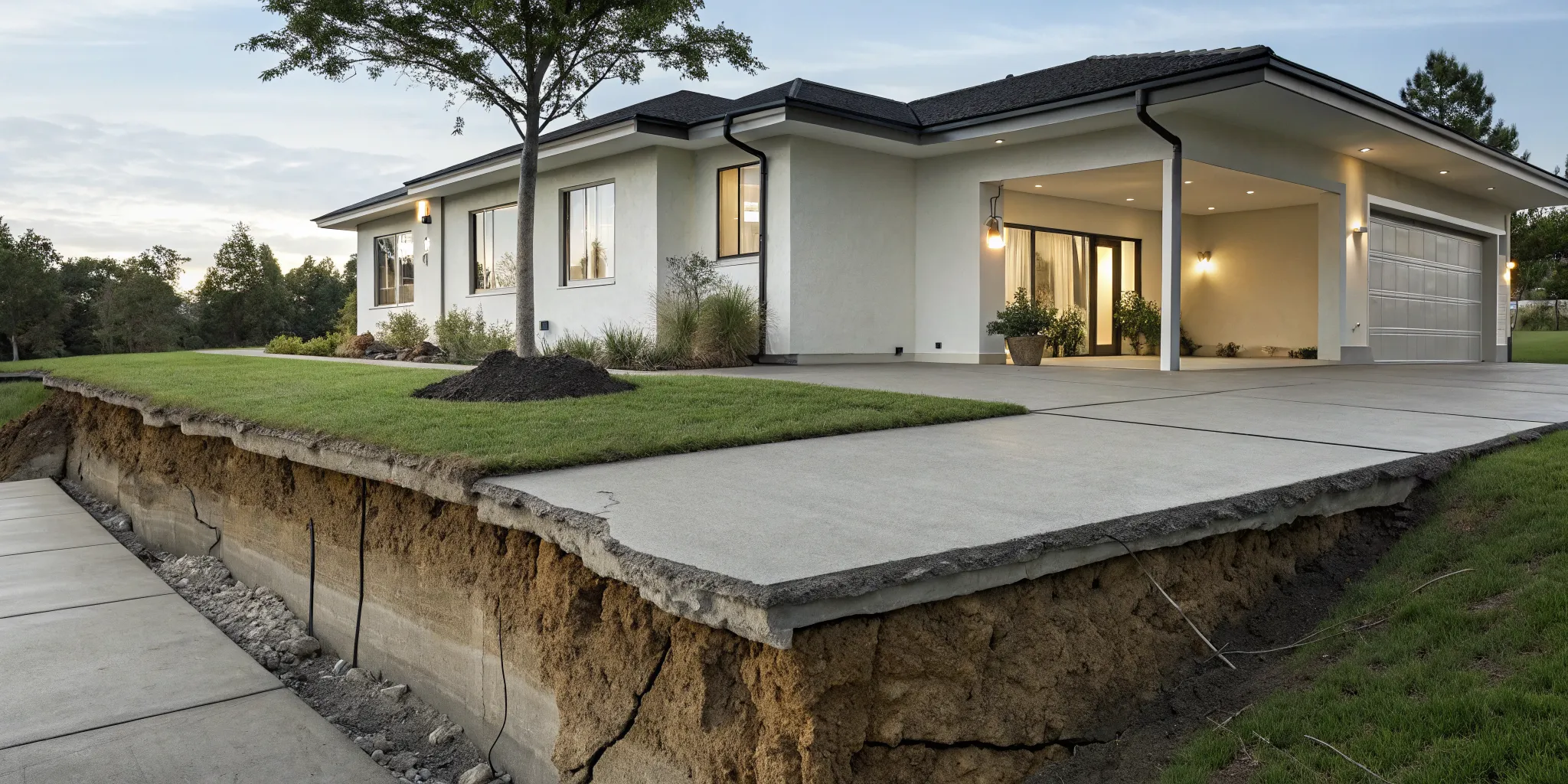
That thin crack spidering up the drywall wasn’t there last month. Now, the bedroom door is starting to stick, and you have a nagging feeling that these small annoyances might be symptoms of a much bigger problem. When your home rests on a single slab of concrete, these are often the first clues that something is shifting underneath. This is where understanding concrete slab foundation repair becomes essential. It’s not just about patching a crack; it’s about diagnosing the root cause and securing your home’s entire structure. This guide will walk you through everything you need to know, from identifying the key warning signs to understanding the different repair methods and what they cost.
Key Takeaways
- Learn to spot the early warning signs: Your home will tell you when something is wrong, so pay attention to new cracks in walls, sticking doors and windows, or uneven floors, as these are often the first clues to foundation issues.
- Realize that the right fix depends on the cause: Foundation repair is not a one-size-fits-all solution; the best method, whether it’s foam injection or underpinning with piers, is determined by an accurate diagnosis of the underlying problem.
- Choose a trusted professional and maintain the work: Your home’s long-term stability relies on hiring a qualified, insured contractor who offers a strong warranty and on your commitment to preventative maintenance, especially managing water drainage.
What Is Slab Foundation Repair?
When you hear “foundation repair,” it might sound like a massive, complicated project, but let’s break it down. Slab foundation repair is simply the process of fixing issues with the single concrete slab your home sits on. Unlike homes with basements or crawl spaces, a slab foundation is a solid piece of concrete poured directly onto the ground. Over time, things like shifting soil, poor drainage, or even tree roots can cause this slab to crack, sink, or become uneven. The goal of repair isn’t just to patch up cracks you can see; it’s to address the underlying cause and make your home stable and secure for the long haul.
Professionals use several specialized techniques to correct these problems. You might hear terms like slabjacking, which involves lifting the slab with a grout-like mixture, or using polyurethane foam to achieve the same result with a lighter, more durable material. For more serious settlement issues, contractors might install steel piers deep into the ground to support and lift the foundation. Each method is designed to fix a cracked or settling slab and prevent future movement, ensuring your home rests on solid ground. Think of it less like a patch and more like a permanent solution that restores your home’s structural integrity. The right approach depends entirely on what’s causing the problem in the first place, which is why a professional assessment is so important.
Key Signs Your Foundation Needs Help
Your home is pretty good at telling you when something is wrong, you just have to know what to look for. The most obvious signs of slab foundation trouble are cracks in your floors, walls (especially around door frames), or the exterior of your home. You might also notice that your floors feel sloped or uneven when you walk on them. Another classic signal is having doors and windows that suddenly start to stick or won’t close properly. This happens because the shifting foundation has warped their frames. Ignoring these signs is risky, as small cracks can worsen and lead to bigger issues like water damage or structural weakness.
When to Call a Professional
The moment you spot one of the key warning signs, it’s time to call a professional. Foundation problems never fix themselves; they only get worse and more expensive to repair over time. While a small crack might seem like a simple DIY fix, it’s often a symptom of a much larger issue happening beneath your home. A professional can perform a structural consultation to accurately diagnose the cause and extent of the damage. They have the tools and expertise to determine the best repair method for your specific situation, giving you a permanent solution instead of a temporary patch. Acting quickly saves you stress and protects your home’s value.
What Causes Slab Foundation Damage?
Foundation problems rarely happen overnight. They usually develop slowly, caused by forces acting on your home over months or even years. Understanding what’s behind the damage is the first step toward finding the right solution. Most issues come down to soil, water, and sometimes, the way the house was built in the first place. Let’s look at the most common culprits behind a damaged slab foundation.
Shifting Soil and Settlement
The ground beneath your home is more active than you might think. Clay soils, for example, expand when they get wet and shrink when they dry out. This constant movement can put a lot of stress on your foundation. Over time, the soil can also settle and compact. If this process happens uniformly, it might not cause any issues. But often, the soil settles unevenly, causing one part of your foundation to sink lower than another. This differential settlement is a primary cause of cracks in your walls and uneven floors.
Water Damage and Drainage Issues
Water is the number one enemy of a healthy foundation. Since slab foundations are relatively shallow, they are particularly vulnerable to moisture problems. Poor drainage, clogged gutters, or improper grading can lead to water pooling around your home. This excess moisture saturates the soil, which can cause it to heave or lose its strength. As the soil gets wet and then dries out repeatedly, it can weaken the foundation and lead to significant shifting and cracking. Managing water flow around your property is one of the most important things you can do for your foundation’s health.
Intrusive Tree Roots
Large, mature trees can add a lot of beauty to your property, but their roots can be a hidden threat to your foundation. As trees grow, their root systems expand in search of water and nutrients. If a tree is planted too close to your home, its roots can grow underneath the slab. Over time, these roots can become thick and powerful enough to exert pressure on the foundation, causing it to lift and crack. The roots can also draw moisture out of the soil, causing it to shrink and settle, which leads to even more instability.
Problems from Poor Construction
Sometimes, foundation problems can be traced back to the day the house was built. For a slab foundation to be stable, it must be poured on top of soil that has been properly compacted. If the ground wasn’t prepared correctly, it will continue to settle after the house is built, taking the foundation with it. Likewise, if the concrete mix was poor quality or the slab wasn’t built well, it can be more susceptible to cracking and other issues down the road. These initial mistakes can create long-term headaches for a homeowner.
Your Guide to Foundation Repair Methods
When you discover a foundation problem, it’s easy to jump to worst-case scenarios. But the good news is that modern foundation repair offers a range of solutions tailored to specific issues. It’s not a one-size-fits-all fix; the right approach depends entirely on what’s causing the problem, from soil settlement to water issues. Think of it like visiting a doctor. You wouldn’t want a broken arm treated with cough syrup, and the same principle applies here. A crack from settling soil needs a different solution than a slab sinking due to poor drainage.
The main goal of any repair is to restore your home’s structural integrity and prevent future damage. Professionals generally categorize repairs into a few key types. Some methods, like slabjacking, focus on lifting a sunken slab back into its original position. Others are designed to seal and reinforce cracks to keep them from spreading and letting in moisture. For more serious settlement, underpinning techniques create a new, deeper support system for your foundation.
Understanding these different slab foundation repair methods can help you feel more confident when you talk to a professional. It allows you to have a more informed conversation about your home’s specific needs. Let’s walk through the most common techniques, what they do, and when they’re the right choice for the job. This will give you the knowledge you need to ask the right questions and understand the recommendations you receive from a contractor.
Slabjacking (Mudjacking)
Slabjacking, often called mudjacking, is a classic method for lifting a sunken concrete slab. It’s the go-to solution when the soil beneath your foundation wasn’t compacted properly and has settled over time. A contractor drills holes through the slab and pumps a grout-like slurry underneath. This mixture fills the empty space and hydraulically lifts the concrete back to its original level. Think of it like carefully inflating a flat air mattress until it’s firm and level again. It’s a proven technique that effectively addresses sinking foundations without requiring a full replacement of the concrete.
Polyurethane Foam Injection
A more modern take on slabjacking, polyurethane foam injection (or polyjacking) also lifts sunken concrete but uses a different material. Instead of a heavy grout mixture, this method uses a high-density polyurethane foam. Contractors drill much smaller holes into the slab and inject the two-part polymer. As the components mix, the foam expands, filling voids in the soil and gently lifting the slab. This process is less invasive, the material is lightweight yet incredibly strong, and it cures very quickly. It’s an excellent choice for fixing minor to moderate settlement with minimal disruption to your home.
Epoxy Injections for Cracks
If you’re dealing with cracks in your foundation rather than a sinking slab, epoxy injections are a fantastic solution. This method doesn’t lift the foundation; instead, it focuses on structural bonding. A professional cleans the crack and injects a high-strength epoxy resin directly into it. The epoxy fills the entire gap and cures to a strength that is often greater than the concrete itself, effectively welding the two sides of the crack back together. This not only seals the crack from moisture but also restores the structural integrity of the slab. It’s the preferred method for more serious, structural cracks that need a permanent fix.
Underpinning with Piers
For foundations with severe settlement problems, underpinning is the most robust and permanent solution. This process involves installing deep foundation supports, called piers, to transfer the weight of your home to more stable soil or bedrock far below the surface. One common type is the helical pier, a large steel shaft with screw-like plates that is drilled deep into the ground. Once the piers reach stable soil, brackets are attached to your foundation, and the house is stabilized or lifted back into place. This method provides lasting support and is ideal for homes with significant sinking or cracking due to unstable soil.
Comparing Repair Methods: What Works Best?
So, which method is the best? The honest answer is: it depends entirely on your home’s specific issue. Slabjacking and foam injection are great for lifting settled slabs, while epoxy is designed for sealing cracks. Underpinning is the heavy-duty solution for major stability problems. The most important step is getting an accurate diagnosis from a qualified professional. They can assess the root cause of the damage and recommend the most effective, long-term solution. Fixing foundation problems early is always the best approach, as it can often restore your foundation and prevent more extensive and costly repairs down the line.
How Much Does Slab Foundation Repair Cost?
Let’s talk about the numbers. The cost of foundation repair is a major concern for any homeowner, and unfortunately, there isn’t a single price tag. The final bill can range from a few thousand dollars for minor crack injections to tens of thousands for extensive underpinning projects. The price depends entirely on what’s causing the problem, the severity of the damage, and the specific repair method needed to fix it for good.
The good news is that you can get a clear idea of what to expect by understanding the key factors that influence the price. Below, we’ll break down what goes into the cost, look at typical price ranges for different repair types, and walk through how to get a reliable estimate for your home.
Factors That Influence Pricing
The biggest factor driving your repair cost is the extent of the damage. A few small cracks are much simpler and cheaper to fix than a foundation that has significantly settled or heaved. This is why it’s so important to address foundation problems as soon as you spot them. What might be a straightforward fix today could become a major project if left alone.
The underlying cause of the damage also plays a huge role. For instance, if poor water management around your home is the culprit, your repair plan might need to include grading or drainage solutions in addition to fixing the slab itself. The type of soil your house is built on and the accessibility of the damaged area will also affect the labor and equipment needed, which in turn impacts the final price.
Cost Breakdowns by Repair Type
Different problems require different solutions, and each comes with its own price range. For minor cracks, epoxy injections can be a relatively low-cost fix. For more significant issues, you’re looking at more involved methods. For example, slabjacking, which involves pumping a grout mixture under the slab to lift it, is often used for sunken concrete in the middle of a room.
For more severe settlement, especially along the home’s perimeter, you’ll likely need underpinning with piers. Installing helical piers, which are steel piles screwed deep into stable soil, provides a permanent solution but is a more intensive process. A project involving significant cracks and pier installation can often range from $8,000 to $12,000 or more, depending on the number of piers required.
How to Get an Accurate Estimate
The best way to understand the cost for your specific situation is to get a professional assessment. Most reputable foundation repair companies offer a free inspection and estimate, so be cautious of any business that wants to charge you for an initial visit. It’s always a smart move to get quotes from at least two or three different contractors to compare their proposed solutions and costs.
When you meet with a contractor, ask them to explain exactly what they’re recommending and why. A trustworthy professional will be able to detail the cause of the damage and justify why a certain repair method is the best long-term fix for your home. This will help you select a foundation repair company that you can feel confident in.
How to Choose a Foundation Repair Professional
Finding the right foundation repair professional can feel like a huge task, but it’s one of the most important decisions you’ll make for your home. This isn’t just about fixing a crack; it’s about ensuring the long-term stability and safety of your property. The right contractor will not only have the technical skills but will also be a transparent and reliable partner who can explain the process clearly and stand behind their work.
Think of this as hiring an expert for a major project, because that’s exactly what it is. You’ll want to do your homework, ask plenty of questions, and choose a company that gives you confidence. A great professional will take the time to inspect your property thoroughly, discuss your options without high-pressure sales tactics, and provide a detailed, written estimate. Taking a little extra time to vet your options now can save you from major headaches and expenses down the road. Remember, the goal is to find a solution that lasts, backed by a team you can trust.
Understanding Repair Materials and Products
A reputable foundation repair company should be able to clearly explain the materials and products they plan to use on your home. Different problems require different solutions, from steel piers for underpinning to polyurethane foam for lifting a slab. A contractor should walk you through why they’re recommending a specific method for your situation. Ask them about the pros and cons of their proposed materials and why they are the best fit for your soil type and foundation damage.
Look for companies that offer expert concrete slab repair services backed by strong, transferable warranties. A good warranty shows that the company is confident in its materials and workmanship, giving you peace of mind that the fix is built to last.
Questions to Ask Before You Hire
Once you have a few potential companies in mind, it’s time to start asking questions. Don’t be shy about this part; a trustworthy contractor will be happy to provide answers. If you notice signs of a foundation problem, it’s best to get it checked by a professional right away.
Here are a few key questions to get you started:
- How long have you been in business in this area?
- Can you provide proof of general liability insurance and workers’ compensation?
- What specific type of repair do you recommend for my home, and why?
- What does your warranty cover, and is it transferable if I sell my home?
- Can you provide a list of recent local references?
Also, make sure to check the company’s rating with the Better Business Bureau (BBB) to see their track record with other customers.
Verifying Credentials and Certifications
Before you sign a contract, take a final step to verify the company’s credentials. This includes confirming they are licensed to work in your state and carry adequate insurance. This protects you in case of any accidents or property damage during the repair process. Most foundation repair companies will provide a free inspection and estimate. If a company wants to charge you just for an assessment, you may want to reconsider your options.
Look for established companies with a history of positive reviews and a professional online presence. You can often find customer testimonials, case studies, and project photos on their websites. Reading about the experiences of other homeowners can give you valuable insight into a company’s reliability, communication, and the quality of their work.
How to Choose the Right Repair Method for Your Home
Picking the right fix for your foundation can feel like a huge decision, but you don’t have to make it alone. The best approach depends on your home’s specific situation, your budget, and the expertise of the professionals you hire. By looking at these factors together, you can find a solution that not only solves the current problem but also protects your home for years to come. Let’s walk through the key things to consider so you can feel confident in your choice.
Assess the Damage and Soil Conditions
First things first, you need a clear picture of what’s going on with your foundation. Is it a few hairline cracks, or is one side of your house noticeably sinking? The location and severity of the damage are the biggest clues to the underlying cause. Foundation issues can range from minor to major, but the good news is that most can be resolved, especially when you address them early. The soil your house sits on also plays a huge role. Expansive clay soils behave very differently from sandy soils, and the right repair method will account for these local conditions. A professional assessment is the best way to understand both the damage and the soil, which points you toward the most effective fix.
Balance Your Budget with Long-Term Value
While cost is always a factor, the cheapest repair isn’t always the best value. Think about the long-term health of your home. For example, slabjacking might be a cost-effective fix for a slab that has settled in the middle, but it won’t be the right solution if the entire perimeter is sinking. In that case, a more involved method like underpinning with piers might be necessary for a permanent fix. Choosing the right repair method is an investment in your property’s stability and value. A reputable contractor can explain the pros and cons of each option, helping you select a durable solution that fits your budget and prevents more expensive problems down the road.
Consider Contractor Experience and Warranties
Even the most advanced repair method will fail if it’s not done correctly. That’s why the contractor you choose is just as important as the repair technique itself. Look for a company with proven experience handling foundation problems similar to yours. Don’t be shy about asking for references and checking their credentials. A trustworthy company will be insured and should have a positive rating with organizations like the Better Business Bureau. Also, ask about warranties. A solid warranty shows that the contractor stands behind their work and gives you peace of mind that your investment is protected.
Maintaining Your Foundation After the Repair
After your foundation repair is complete, you can finally breathe a sigh of relief. The major work is done, and your home is back on solid ground. But the job isn’t entirely over. To protect your investment and prevent future issues, you need to be proactive with your home maintenance. Think of it as aftercare for your house. A foundation repair is a significant financial commitment, and a little regular attention is the best way to ensure that fix lasts for decades. It’s your insurance policy against having to repeat the process. By staying on top of a few key areas, you can keep the soil around your home stable and your foundation secure, saving yourself from more stress and expense down the road. This ongoing care is crucial for maintaining your home’s structural integrity and its overall value. It’s about shifting from a reactive approach, where you fix problems as they appear, to a preventative one that stops them before they start. These simple habits don’t require a lot of time or money, but they make a world of difference in the long-term health of your home.
Manage Drainage and Water Flow
This is arguably the most important step you can take. Water is the primary enemy of a healthy foundation because it causes the soil around it to expand and contract, putting constant pressure on your home. As experts often note, proper drainage helps keep soil stable and reduces the need for future repairs. Make it a habit to clean your gutters every fall and spring to prevent overflows. You should also check that your downspouts carry water at least five feet away from your house. Finally, ensure the ground around your home slopes gently away from the foundation to prevent water from pooling near the walls after it rains.
Schedule Regular Inspections
You don’t need to be an expert to keep an eye on your foundation. Simply walking around your property a few times a year can make a huge difference. Look for any new cracks in the foundation walls, bricks, or interior drywall. Check for signs of moisture in your basement or crawl space, like damp spots or a musty smell. Regularly inspecting your foundation is vital for catching small issues before they become big, expensive problems. It’s also smart to have a professional come out for a check-up every few years, especially if you live in an area with shifting soil or extreme weather.
Watch for Early Warning Signs
Your house will often give you clues when something isn’t right. You just have to know what to look for. Pay attention to the little things that seem off. Are new cracks appearing above doorways or windows? Do your floors suddenly seem to slope or feel bouncy? Doors and windows that start to stick or refuse to close properly are classic signals of foundation movement. If you notice any of these signs, don’t wait and hope they go away. Addressing a problem early is the best way to handle it quickly and affordably, preventing a small issue from turning into another major repair.
Frequently Asked Questions
How can I tell if a crack is serious or just a normal part of a house settling? This is a great question, as not every crack spells disaster. Generally, small, vertical hairline cracks in a concrete slab are less concerning than horizontal or “stair-step” cracks in your walls. The most telling signs of a serious issue are cracks that are wider than a quarter-inch, are wider at one end than the other, or have one side that is higher than the other. If you see these, or if you notice cracks appearing alongside other symptoms like sticking doors, it’s a clear signal to call a professional for an assessment.
Will I have to move out of my house during the foundation repair? For the vast majority of slab foundation repairs, you can absolutely stay in your home. Most methods, like polyurethane foam injection or pier installation, are performed from the outside and cause minimal disruption to your daily life. While there might be some noise during work hours, the process is typically not invasive enough to require you to relocate. Your contractor will give you a clear idea of what to expect and will let you know if any specific, unusual circumstances would require you to be away for a short time.
How long does a typical foundation repair project take? The timeline really depends on the method being used and the extent of the damage. Simpler jobs, like injecting epoxy into a few cracks or lifting a small section of a slab with polyurethane foam, can often be completed in just a day or two. More extensive projects, such as underpinning a significant portion of your home with helical piers, might take a week or more. A reliable contractor will provide you with a detailed project schedule before any work begins.
Is foundation repair covered by my homeowner’s insurance? Unfortunately, foundation repair is typically not covered by standard homeowner’s insurance policies. Most policies exclude damage that results from gradual soil settlement or poor construction, viewing it as a maintenance issue rather than a sudden, accidental event. However, there can be exceptions. If the foundation damage was a direct result of a covered peril, like a burst pipe or a natural disaster, you might have a case for a claim. It’s always best to review your specific policy and speak with your insurance agent to be sure.
Once the repair is done, will my house go back to exactly how it was before? The primary goal of foundation repair is to stabilize your home and prevent any further movement, which it does very effectively. In many cases, lifting the foundation can also close up cracks and improve the function of sticky doors and windows. However, it’s important to have realistic expectations. The process is focused on structural correction, not cosmetic perfection. You may still need to do some minor cosmetic work afterward, like patching drywall or repainting, to fully restore your home’s appearance.